
A personalized book about social difficulties, written for your child
Your child watches from the edge of a game. You want to know whether they want company, and how to help if they do.
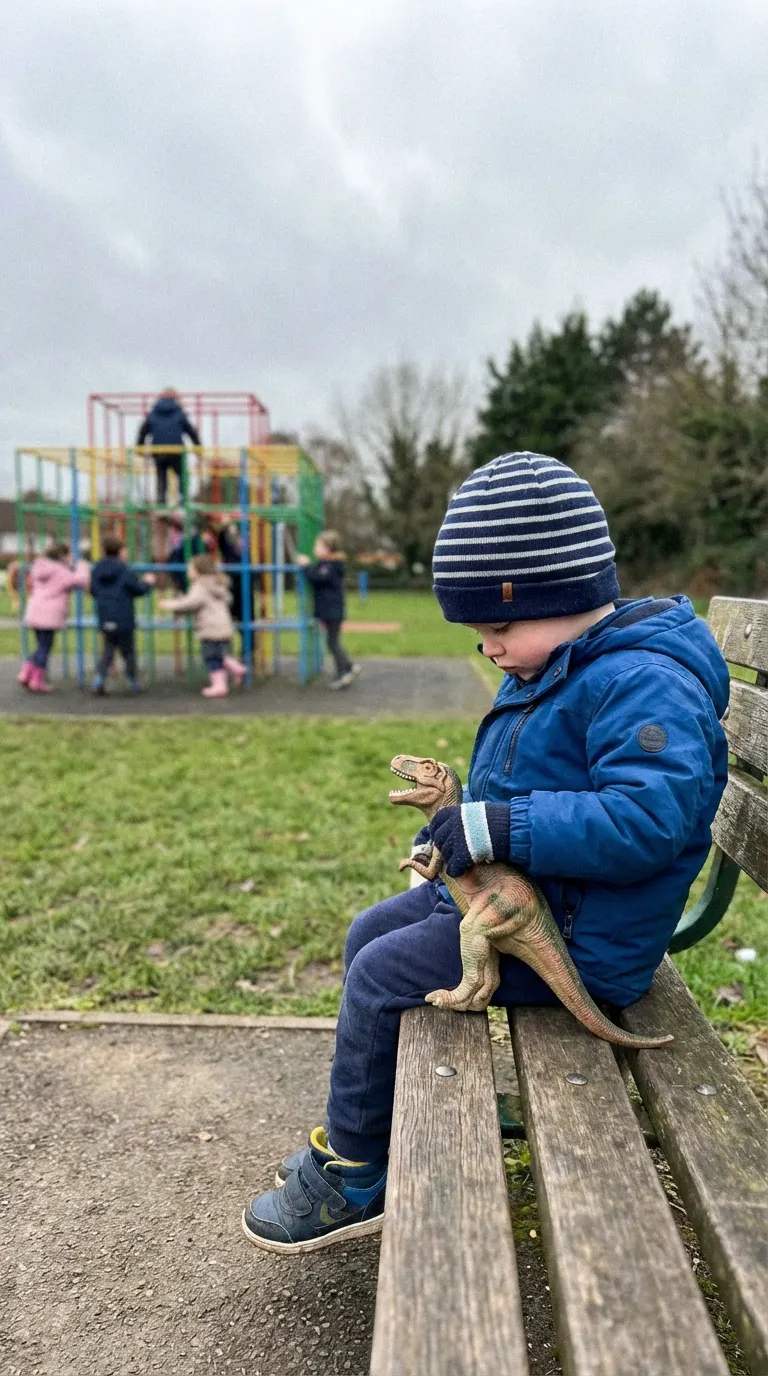
Moments you might recognize
- At the park, your child watches a group building in the sand. You are trying to tell whether they want to join or are happy to watch.
- A playdate ends over a toy both children wanted. You think back through the afternoon, looking for the moment where a little more help might have mattered.
- “Nobody played with me today.” You put down what you are holding. Before suggesting tomorrow, you want to hear about today.
Possible contexts and ideas to explore, in the free parent guide: Why does my child struggle to make friends?
Watching from the edge of the playground
From the bench, you may see loneliness. Your child may be interested, uncertain or content to watch. Ask before supplying the meaning.
If they want to join, help identify one opening and offer company for the approach if needed. A pause or a different game can remain a valid choice.
When a playdate ends in tears
The difficult part may be sharing a particular toy, changing a game or coping with an unwanted result. A whole afternoon does not have to become a verdict on social ability.
For next time, choose one adjustment: a shorter visit, a simpler activity or personal toys put away. Protect both children and help with repair after an unsafe action.
“Nobody played with me today”
The sentence deserves space before a solution. Ask what happened and what your child wanted, then speak with the teacher if the pattern persists.
You could explore one next step together, including asking an adult for help. A story offers a shared situation to discuss; it must not suggest that exclusion is the child’s fault to fix.
Ideas to explore at home
- Ask what they wanted
- Try one opening through play
- Make the setting manageable
- Notice the response as well as the attempt
Find the context for each possibility in the guide: Why does my child struggle to make friends?
An Ownway Stories adventure to read together
Ownway Stories creates an adventure around social difficulties, with a character you choose carrying your child’s name. In a familiar paper-cut world, the hero discovers a possible next action with support available. The guide inside connects that particular story to ideas you can explore together. You choose what fits your family.
$32.99
A 32-page printed picture book, for ages 3–6 · You’ll see the cover and the first scenes before you decide.
Questions parents ask
How does a personalized story help with social struggles?
An Ownway adventure can explore approaching someone, making a request or taking part in a shared activity. The hero carries your child’s name and discovers a possible action. The guide invites a connection to home, without promising friendship or making welcome something a child earns.
Are the story and the illustrations created for my child?
Yes. The story and illustrations are generated around the name, character, challenge, dedication, and short detail you choose. The system does not select a finished story from a fixed library.
What age is this for?
Ownway Stories are written for children ages 3 to 6 — the age when big feelings arrive faster than the words to describe them.
How long does delivery take?
Each book is printed on demand, so timing depends on production and the carrier. We currently ship within the US only and email available tracking details after dispatch.
Parents also work on
Facing something else? See all 16 challenges · Prefer to read first? Browse the free parent guides.