
A personalized book about picky eating, written for your child
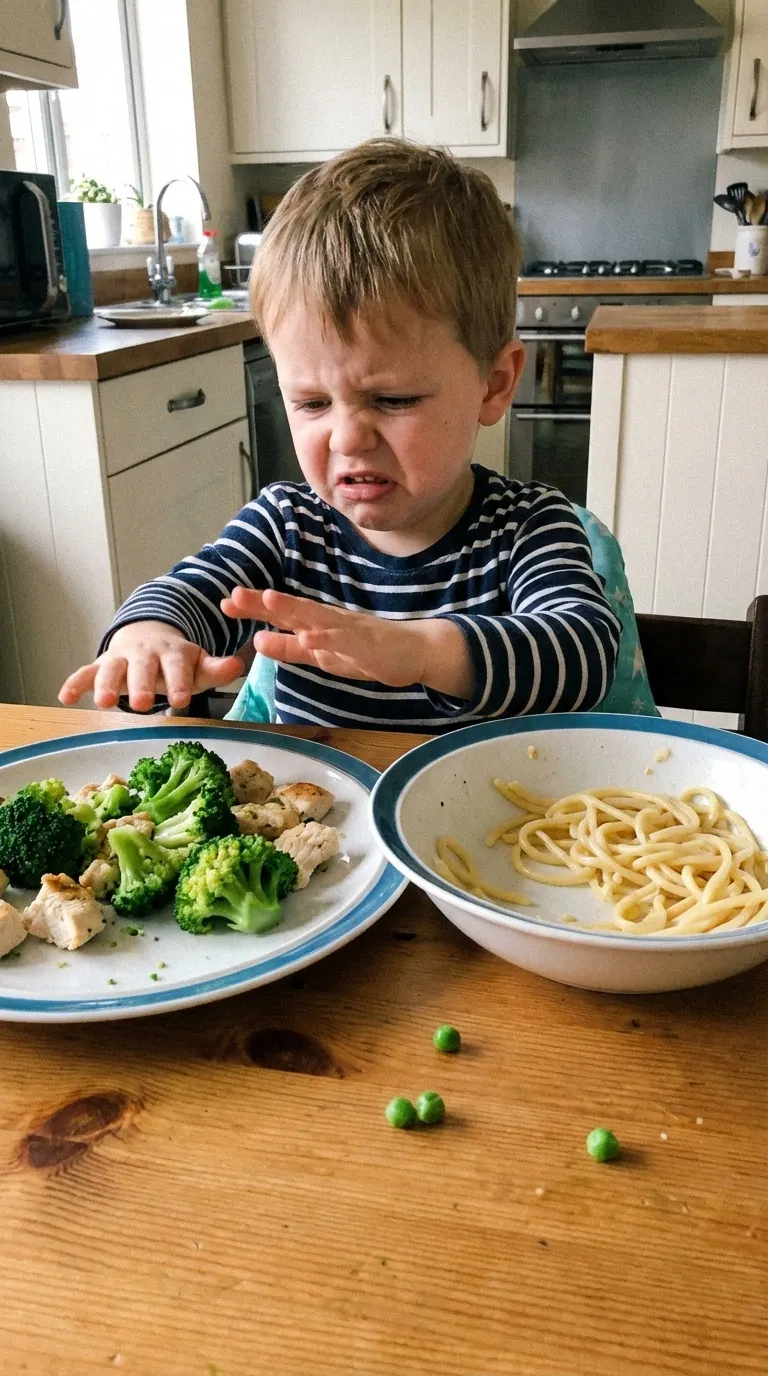
The plate is on the table. Your child pushes it away. You want meals to hold more than worry and negotiation.
Moments you might recognize
- You made dinner. They looked at the plate and asked for plain pasta. You are tired and wondering whether to serve something else.
- At the birthday party, your child leaves the pizza untouched. Someone offers advice while you are still trying to find out what your child would feel comfortable eating.
- You have tried a few different approaches. Tonight you would like to sit together without counting the bites.
Possible contexts and ideas to explore, in the free parent guide: Why is my child such a picky eater?
When only a few familiar foods feel acceptable
A familiar food may have a predictable taste or texture. That is something you can observe, without assuming it explains every refusal.
Keep a note of accepted foods and any discomfort. A shrinking or very restricted range is a reason to ask for individual guidance, not a challenge a story is expected to solve.
When dinner becomes a negotiation
It is hard to watch a meal you prepared go untouched. A child can notice that worry even when you are trying to keep your voice light.
You might try serving a familiar food with the meal and letting a taste remain optional. Choose a manageable meal plan for you too; the goal is not an endless menu of alternatives.
Exploring without requiring a bite
Food can be encountered while washing it, looking at its color or putting it on a serving plate. Participation does not have to end in eating.
If your child’s story includes a moment of exploration, you can notice what the hero chose to try. The next step at home remains your child’s experience, not a test of whether the book worked.
Ideas to explore at home
- Include something familiar
- Leave room to decline a taste
- Invite a small kitchen task
- Notice the specific difficulty
Find the context for each possibility in the guide: Why is my child such a picky eater?
An Ownway Stories adventure to read together
Ownway Stories creates an adventure around picky eating, with a character you choose carrying your child’s name. In a familiar paper-cut world, the hero discovers a possible next action with support available. The guide inside connects that particular story to ideas you can explore together. You choose what fits your family.
$32.99
A 32-page printed picture book, for ages 3–6 · You’ll see the cover and the first scenes before you decide.
Questions parents ask
How can a story help a picky eater?
An Ownway story can make space for curiosity about something unfamiliar, at the hero’s own pace. The parent guide connects an action from that adventure to an optional exploration at home. It does not promise new foods eaten or replace feeding support.
Are the story and the illustrations created for my child?
Yes. The story and illustrations are generated around the name, character, challenge, dedication, and short detail you choose. The system does not select a finished story from a fixed library.
What age is this for?
Ownway Stories are written for children ages 3 to 6 — the age when big feelings arrive faster than the words to describe them.
How long does delivery take?
Each book is printed on demand, so timing depends on production and the carrier. We currently ship within the US only and email available tracking details after dispatch.
Parents also work on
Facing something else? See all 16 challenges · Prefer to read first? Browse the free parent guides.