
A personalized book about tantrums, written for your child
A broken cracker. A different cup. A feeling that arrives bigger than either of you expected.
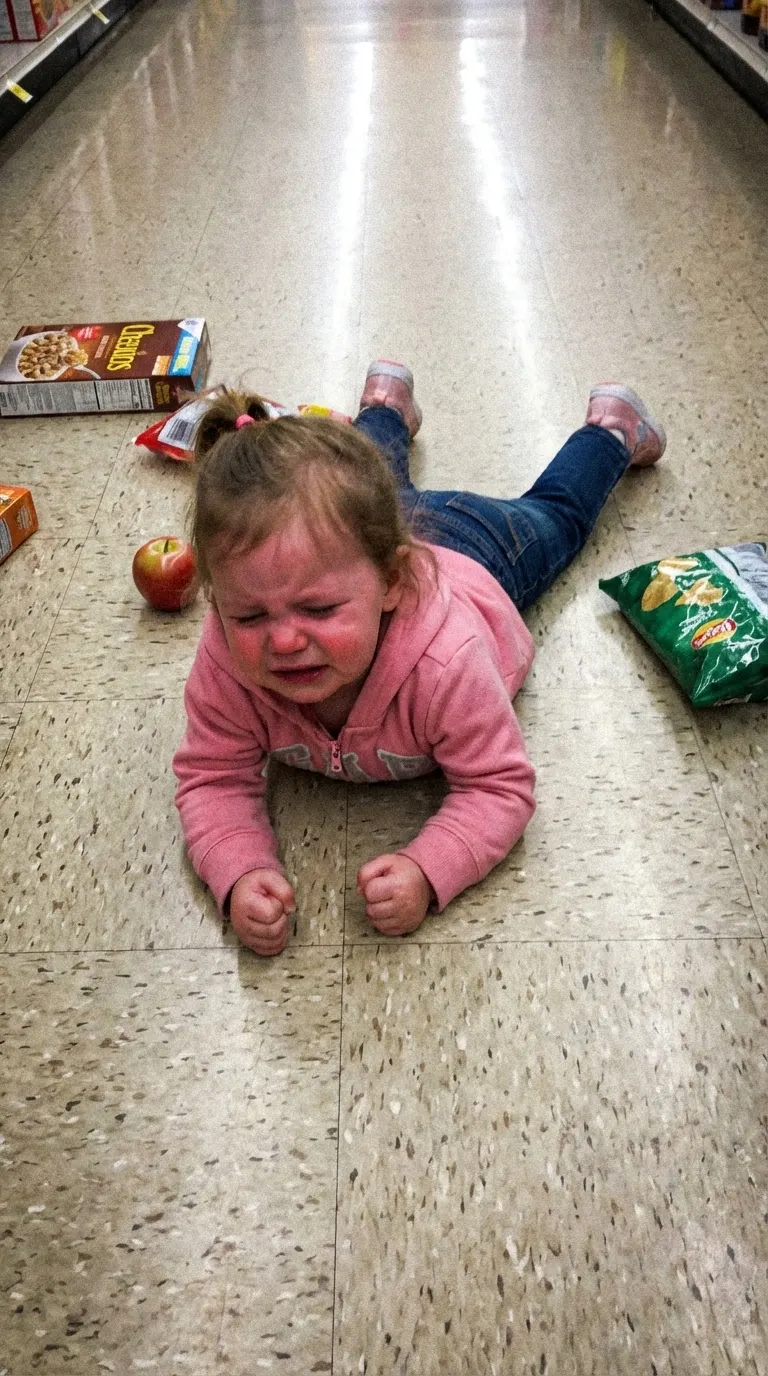
Moments you might recognize
- You are in the grocery aisle. Your child is crying on the floor beside the cart. You are trying to work out what they need while leaving room for someone to pass.
- You said “no” to another popsicle. The answer has not changed, but the tears keep coming. You sit nearby, unsure what words would help.
- You raised your voice. Now the room is quiet and you are thinking about how to return to the moment with your child.
Possible contexts and ideas to explore, in the free parent guide: Why does my child have huge tantrums over small things?
Tantrums at 3, 4, 5 or 6
An age alone does not explain an episode or set a deadline for feelings to become tidy. Look at what happens before, during and after, and whether the difficulty is changing over time.
You can bring those observations to a pediatrician if you are concerned. The aim is to understand what support is needed, not to decide whether your child has passed a test.
When a meltdown happens in public
The grocery aisle adds other people’s eyes to a moment that was already hard. You still need only attend to the people involved and the practical question of safety.
If you can, move to a quieter safe place or shorten the errand. A story about frustration belongs in a later shared moment; it does not need to become a lesson delivered in the aisle.
When school and home look different
A teacher may describe a settled day while you see tears after pickup. The difference does not prove manipulation, trust or any single cause. The demands, people and time of day are different.
Compare observations with the teacher. You might try a quieter arrival home or postpone questions, then notice whether that makes room for an easier transition.
Ideas to explore at home
- Start with safety
- Use a few words
- Return to the moment later
- Look for a repeated pressure point
Find the context for each possibility in the guide: Why does my child have huge tantrums over small things?
An Ownway Stories adventure to read together
Ownway Stories creates an adventure around tantrums, with a character you choose carrying your child’s name. In a familiar paper-cut world, the hero discovers a possible next action with support available. The guide inside connects that particular story to ideas you can explore together. You choose what fits your family.
$32.99
A 32-page printed picture book, for ages 3–6 · You’ll see the cover and the first scenes before you decide.
Questions parents ask
Can a book actually reduce tantrums?
A book cannot promise fewer tantrums. It can offer a shared story about frustration, with a hero bearing your child’s name who discovers a possible next action. The parent guide invites you to revisit that action together when the moment is calmer.
Are the story and the illustrations created for my child?
Yes. The story and illustrations are generated around the name, character, challenge, dedication, and short detail you choose. The system does not select a finished story from a fixed library.
What age is this for?
Ownway Stories are written for children ages 3 to 6 — the age when big feelings arrive faster than the words to describe them.
How long does delivery take?
Each book is printed on demand, so timing depends on production and the carrier. We currently ship within the US only and email available tracking details after dispatch.
Parents also work on
Hitting & biting: holding a clear safety limit while exploring another action
Defiance: understanding a refusal while keeping necessary limits
Sensory sensitivity: taking discomfort seriously and making participation easier
Picky eating: making room for curiosity around unfamiliar food
Sibling rivalry: making room for each child in a shared life
Facing something else? See all 16 challenges · Prefer to read first? Browse the free parent guides.