
A personalized book about morning chaos, written for your child
The shoes are by the door, the clock is moving, and your child is still in the middle of something else.
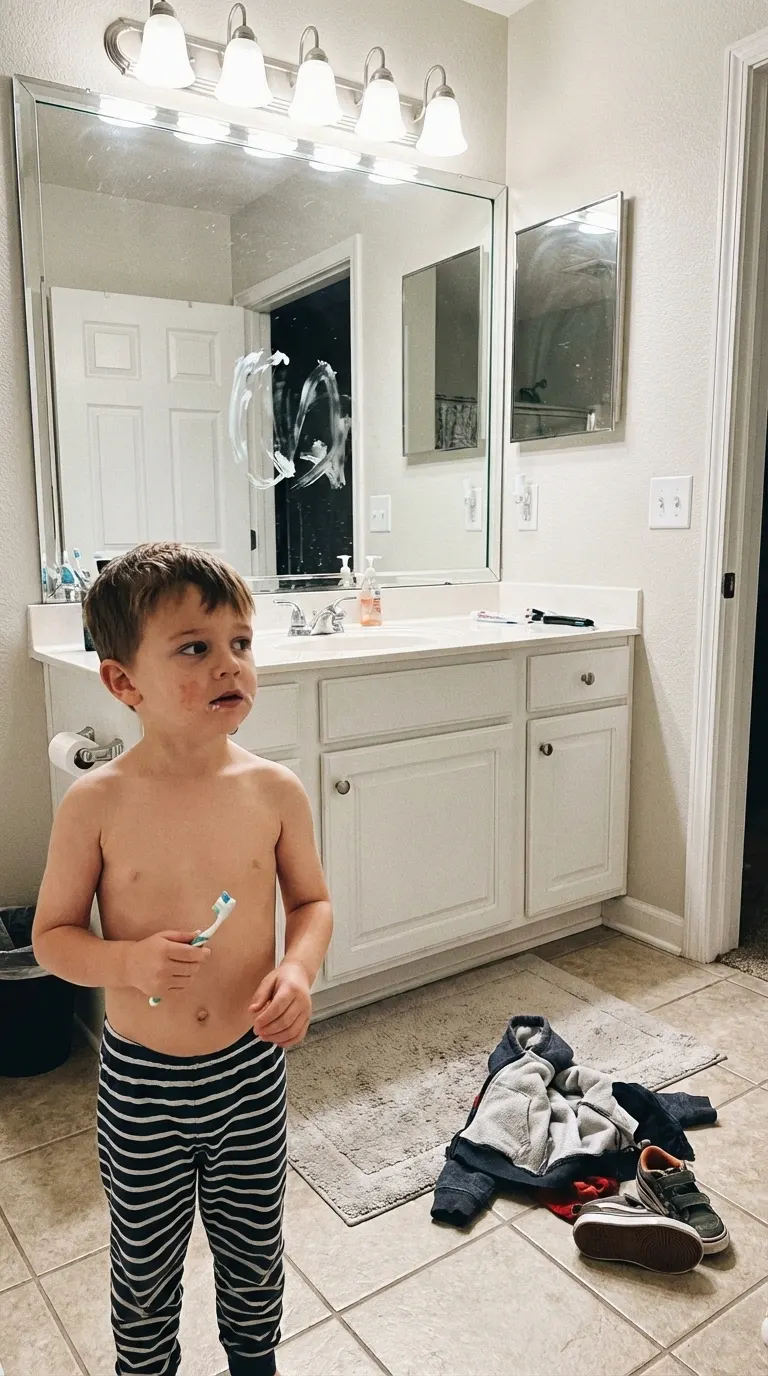
Moments you might recognize
- The bag is packed and breakfast is ready. Your child is still in pajamas because the socks “feel wrong.” The departure time has not moved.
- You asked for shoes. They found one, then stopped to add a piece to a tower. You are standing in the hallway with both coats.
- You are making lunch, looking for a glove and helping with a zipper. The younger child wants to be carried. There is one of you and several things that need doing.
Possible contexts and ideas to explore, in the free parent guide: Why are school mornings with my child such a battle?
When “hurry up” is the only thing you hear yourself saying
Repeating the deadline may tell your child that you are worried without showing what to do next. It is also a sign that the routine is asking a lot of you.
Try replacing one repeated reminder with one visible next step: the clothes on the chair or the bag beside the door. Keep the change small enough to use on a busy day.
Getting dressed becomes the sticking point
A sleeve can be awkward. A seam can be uncomfortable. A favorite shirt may still be in the wash. Getting dressed contains several different problems, even when it looks like one refusal.
Ask which part needs help. Choosing clothes earlier, offering a comfortable alternative or helping with a fastening each addresses a different need.
Finding a shared reference for tomorrow
A story lets you notice how a character handles a sequence of small actions without replaying this morning’s argument.
After reading, you could ask what the hero did first. Use an action that really appears in your child’s book, if it fits your routine, and leave the rest of the adventure as a story to enjoy.
Ideas to explore at home
- Move one decision to the evening
- Show the next step
- Offer a manageable part
- Reduce one source of pressure
Find the context for each possibility in the guide: Why are school mornings with my child such a battle?
An Ownway Stories adventure to read together
Ownway Stories creates an adventure around morning chaos, with a character you choose carrying your child’s name. In a familiar paper-cut world, the hero discovers a possible next action with support available. The guide inside connects that particular story to ideas you can explore together. You choose what fits your family.
$32.99
A 32-page printed picture book, for ages 3–6 · You’ll see the cover and the first scenes before you decide.
Questions parents ask
How does a story help with chaotic mornings?
An Ownway story can explore doing one manageable thing at a time through an adventure. The parent guide links the hero’s action in that book to your own morning. It offers a shared reference, not a promise that tomorrow will run on time.
Are the story and the illustrations created for my child?
Yes. The story and illustrations are generated around the name, character, challenge, dedication, and short detail you choose. The system does not select a finished story from a fixed library.
What age is this for?
Ownway Stories are written for children ages 3 to 6 — the age when big feelings arrive faster than the words to describe them.
How long does delivery take?
Each book is printed on demand, so timing depends on production and the carrier. We currently ship within the US only and email available tracking details after dispatch.
Parents also work on
Facing something else? See all 16 challenges · Prefer to read first? Browse the free parent guides.