
Parent guides · Morning chaos
Parent guide · Ages 3–6Why are school mornings with my child such a battle?
Because mornings stack everything a young child is bad at: transitions, time pressure, and a sequence of boring tasks, on a deadline only you can feel. A 4 year old genuinely can’t picture “we leave in ten minutes.” Making the sequence visible, and handing them a piece of it, beats speed-ups and speeches.
By Ownway Stories · Published July 17, 2026 · Updated August 17, 2026 · About these guides
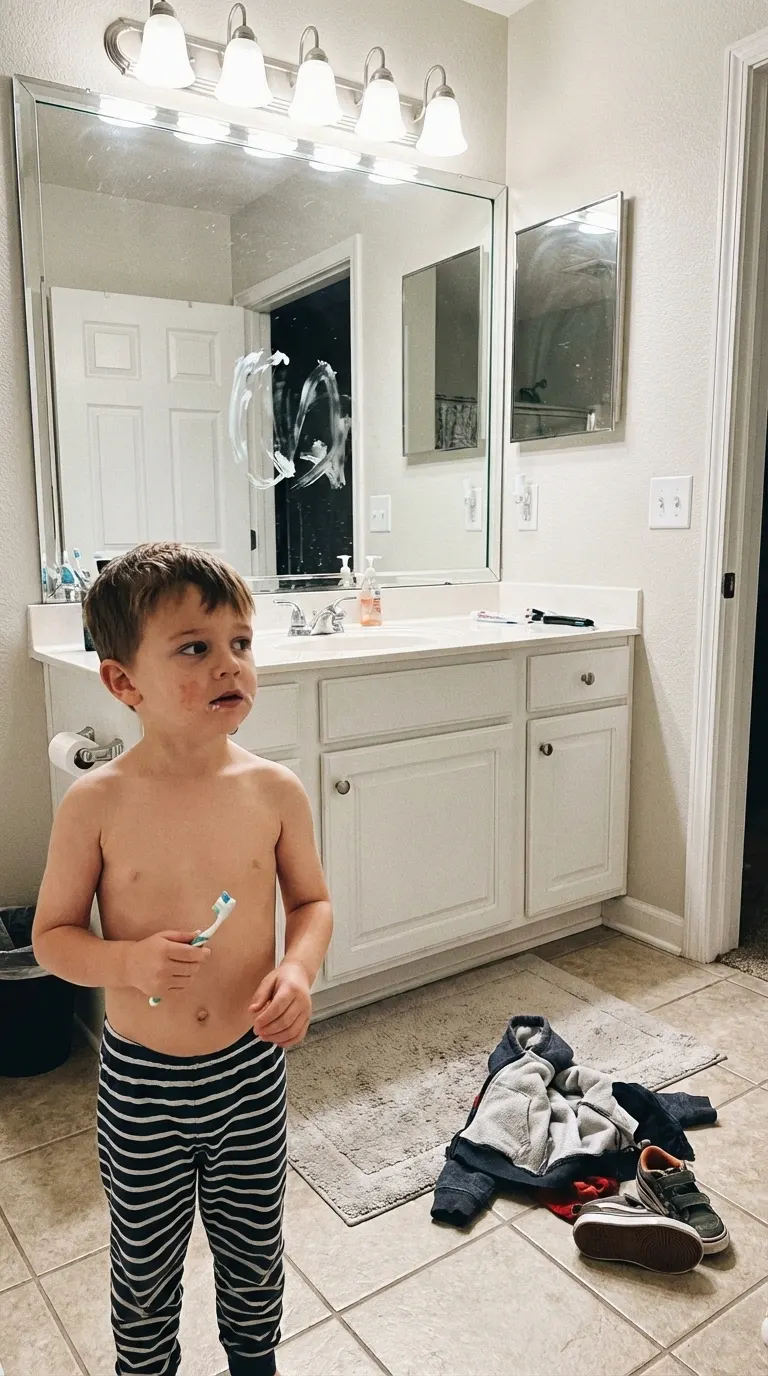
Behind morning chaos: what’s happening between 3 and 6
Mornings compress everything a young child is bad at — transitions, time pressure, sequences of boring tasks — into forty-five minutes, with a hard deadline only the adults can feel. A 4-year-old genuinely cannot picture “we leave in ten minutes”; the future that drives your urgency simply isn’t visible from where they stand.
And every step of the morning is a goodbye: to pajamas, to play, to home, eventually to you. A child who dawdles over shoes is often slowing down the conveyor belt the only way they know how.
What helps at home with morning chaos
Prepare the night before, together. Clothes picked, bag packed, shoes by the door — with the child doing the choosing. Each decision moved to the evening is a fight deleted from the morning.
Make the sequence visible. A picture chart — dress, eat, teeth, shoes — turns your nagging into their checklist. “What’s next on your chart?” feels completely different from “hurry up.”
Race the timer, not the parent. “Can you beat the song?” turns pressure into a game. Kids who dig in against a parent’s push will happily race a kitchen timer.
Wake up earlier than you need — once. Fifteen extra minutes turns the whole morning from sprint to walk. It’s the single highest-leverage change, and it costs nothing but an earlier alarm.
Protect one warm moment. Two minutes of cuddle before the conveyor belt starts. A child who got their dose of you cooperates better than one chasing it all morning through stalling.
Why does my child move so slowly in the morning?
Because nothing about the morning is theirs: the deadline, the sequence, the urgency are all yours. Young kids live at play-speed, and dawdling is usually a mix of genuinely not feeling time and quietly resisting a conveyor belt they didn’t choose. Visibility and small ownership fix more than speeches do.
Do reward charts work for morning routines?
Picture charts that show the sequence work well at this age; prize charts wear out fast. The chart’s real job isn’t the sticker — it’s moving the instructions from your mouth to the wall, so mornings stop being a hundred commands.
When you want the story to carry part of it
Stories are how this age rehearses life, and they work best when the hero is your child. Ownway writes a printed picture book from scratch around their name and this exact challenge, with a short guide for you inside: a personalized book about morning chaos. You’ll see the cover and the first scenes with your child’s name before you decide.
About these guides
This guide is general information written for parents, not medical, psychological or educational advice, and it does not know your child. If a behavior is intense, persistent or new, or if anything here worries you, talk to your pediatrician. Who is behind these guides.