
Parent guides · Screen dependency
Parent guide · Ages 3–6Why does my child melt down when the tablet turns off?
Because screens are engineered to be the easiest thing in the room, and switch-off is the hardest transition a young child faces. It means leaving the most rewarding world available for a slower, grayer one, so the protest is real, not spoiled. Visible endings, a bridge activity after, and fewer life-slots owned by screens shrink it.
By Ownway Stories · Published July 17, 2026 · Updated August 17, 2026 · About these guides
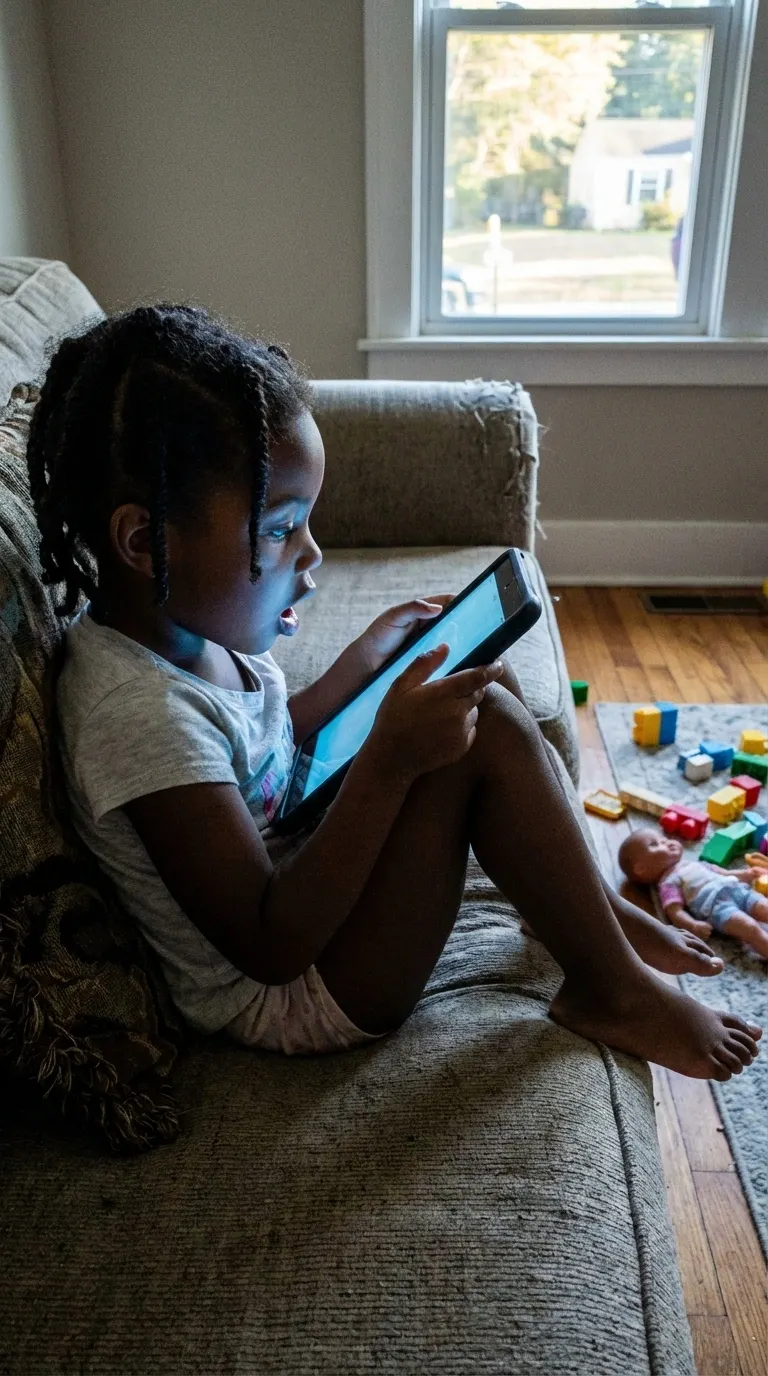
Behind screen dependency: what’s happening between 3 and 6
Screens are engineered to be the easiest thing in the room — instant, bright, endlessly rewarding. A young child’s developing brain, wired to seek quick rewards, doesn’t stand a fair fight. When the tablet goes off, everything else briefly feels slow and gray; the protest is real, not spoiled.
The tears at switch-off are also a transition problem. At 3–6, leaving ANY absorbing world is hard (ask anyone who’s extracted a child from a swimming pool). Screens just build the most absorbing world there is.
What helps at home with screen dependency
End on a boundary they can see. “Two more episodes” beats “twenty minutes” — a child can’t see minutes, but can see an episode end. Visible endings make the off-switch feel less like an ambush.
Put a bridge after the screen. The protest is worst when nothing follows. “Screen off, then we feed the fish / make a snack together” gives the off-ramp a destination instead of a void.
Keep screens out of the machinery. Not in the bedroom, not at the table, not as the boredom reflex in every queue. The fewer life-slots screens own, the smaller each negotiation gets.
Be boring about the rule, warm about the child. The limit doesn’t flex with whining (otherwise whining is the button), but the comfort can: “I know, switching off is hard. Come help me with the snack.”
Let boredom do its job. The flat, whiny stretch after screens go off is withdrawal from easy rewards — and it’s also the doorway to actual play. Most kids cross it in fifteen minutes if no one rescues them with another screen.
How much screen time is OK for a 3–6 year old?
Common pediatric guidance for this age centers on about an hour a day of quality content, ideally watched together — but most families find the WHEN and WHAT matter as much as the how-much: calm content, not right before bed, never as the default response to boredom. Your pediatrician can help you fit numbers to your child.
My child has a meltdown every time the tablet goes off. Normal?
Very common — switch-off is a hard transition out of the most rewarding environment a child knows. It fades when endings are visible, predictable, and always hold. If screens are also displacing sleep, play, or family meals, the issue is the footprint rather than the meltdown.
When you want the story to carry part of it
Stories are how this age rehearses life, and they work best when the hero is your child. Ownway writes a printed picture book from scratch around their name and this exact challenge, with a short guide for you inside: a personalized book about screen dependency. You’ll see the cover and the first scenes with your child’s name before you decide.
About these guides
This guide is general information written for parents, not medical, psychological or educational advice, and it does not know your child. If a behavior is intense, persistent or new, or if anything here worries you, talk to your pediatrician. Who is behind these guides.