
A personalized book about bedtime resistance, written for your child
One more drink, one more story, one more goodnight. The day is ending, but your child is finding it hard to let it end.
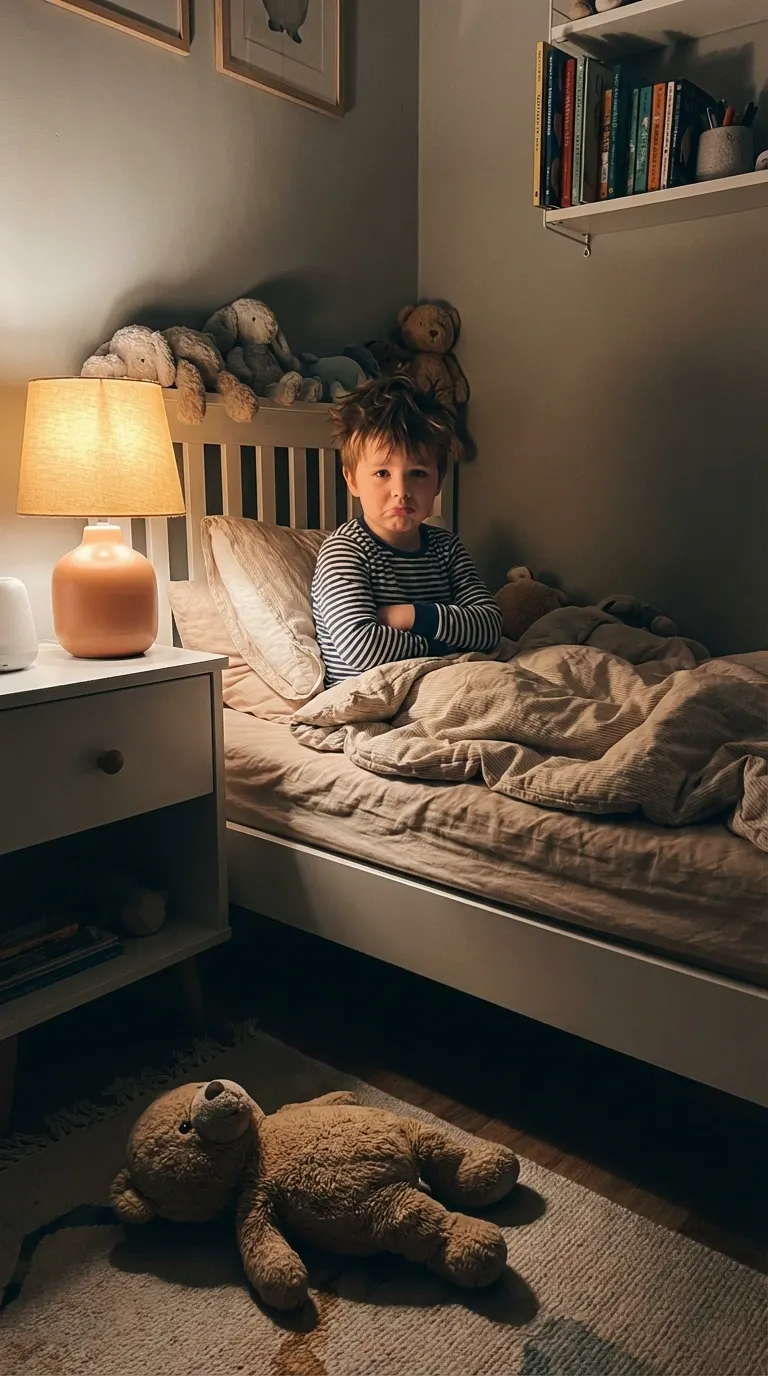
Moments you might recognize
- It’s 8:30 PM. The books are back on the shelf. You reach the bedroom door and hear, “Wait. One more hug.”
- You sat beside the bed while they settled. Your legs are stiff, the dishes are waiting, and you are trying to decide what kind of evening you can manage tomorrow.
- You and your partner take turns with bedtime, but you have different ideas about the final goodnight. The conversation resumes after the bedroom door closes.
Possible contexts and ideas to explore, in the free parent guide: Why does my child fight bedtime every night?
One more drink, one more hug, one more goodnight
A request after lights out is not automatically a strategy to keep you trapped. It may be an ordinary need, a worry or a wish to keep the evening going. The pattern across several evenings tells you more than one difficult night.
You might include water and a chance to talk before the final goodnight. When your child calls again, check what is happening and keep your response consistent with the plan you can manage.
When you stay until they fall asleep
Some families enjoy that time together. For others it becomes uncomfortable or leaves no evening at all. Your need for rest belongs in the decision alongside your child’s need for reassurance.
If you want a different arrangement, talk about it outside bedtime and choose a manageable next step. An Ownway story can remain a familiar part of the evening while the routine around it changes.
When bedtime is difficult every night
It is exhausting to arrive at the end of the day and face another long negotiation. Before adding another technique, look at the timing, the room and what your child says about bedtime.
A small note about what you observe can help a conversation with your pediatrician if sleep remains difficult. A book is shared reading, not a treatment for a sleep problem.
Ideas to explore at home
- Choose a familiar sequence
- Make room for one small choice
- Find a goodnight you can repeat
- Notice what makes settling harder
Find the context for each possibility in the guide: Why does my child fight bedtime every night?
An Ownway Stories adventure to read together
Ownway Stories creates an adventure around bedtime resistance, with a character you choose carrying your child’s name. In a familiar paper-cut world, the hero discovers a possible next action with support available. The guide inside connects that particular story to ideas you can explore together. You choose what fits your family.
$32.99
A 32-page printed picture book, for ages 3–6 · You’ll see the cover and the first scenes before you decide.
Questions parents ask
How can a story help with bedtime resistance?
An Ownway book offers an adventure around the difficulty of ending a moment and settling. The hero carries your child’s name in a familiar paper world. The included parent guide connects an action from that particular story to something you could explore together; it does not promise an easier night.
Are the story and the illustrations created for my child?
Yes. The story and illustrations are generated around the name, character, challenge, dedication, and short detail you choose. The system does not select a finished story from a fixed library.
What age is this for?
Ownway Stories are written for children ages 3 to 6 — the age when big feelings arrive faster than the words to describe them.
How long does delivery take?
Each book is printed on demand, so timing depends on production and the carrier. We currently ship within the US only and email available tracking details after dispatch.
Parents also work on
Facing something else? See all 16 challenges · Prefer to read first? Browse the free parent guides.