
A personalized book about sibling rivalry, written for your child
The same toy, the same seat, the same space beside you. There are two children with something that matters to them.
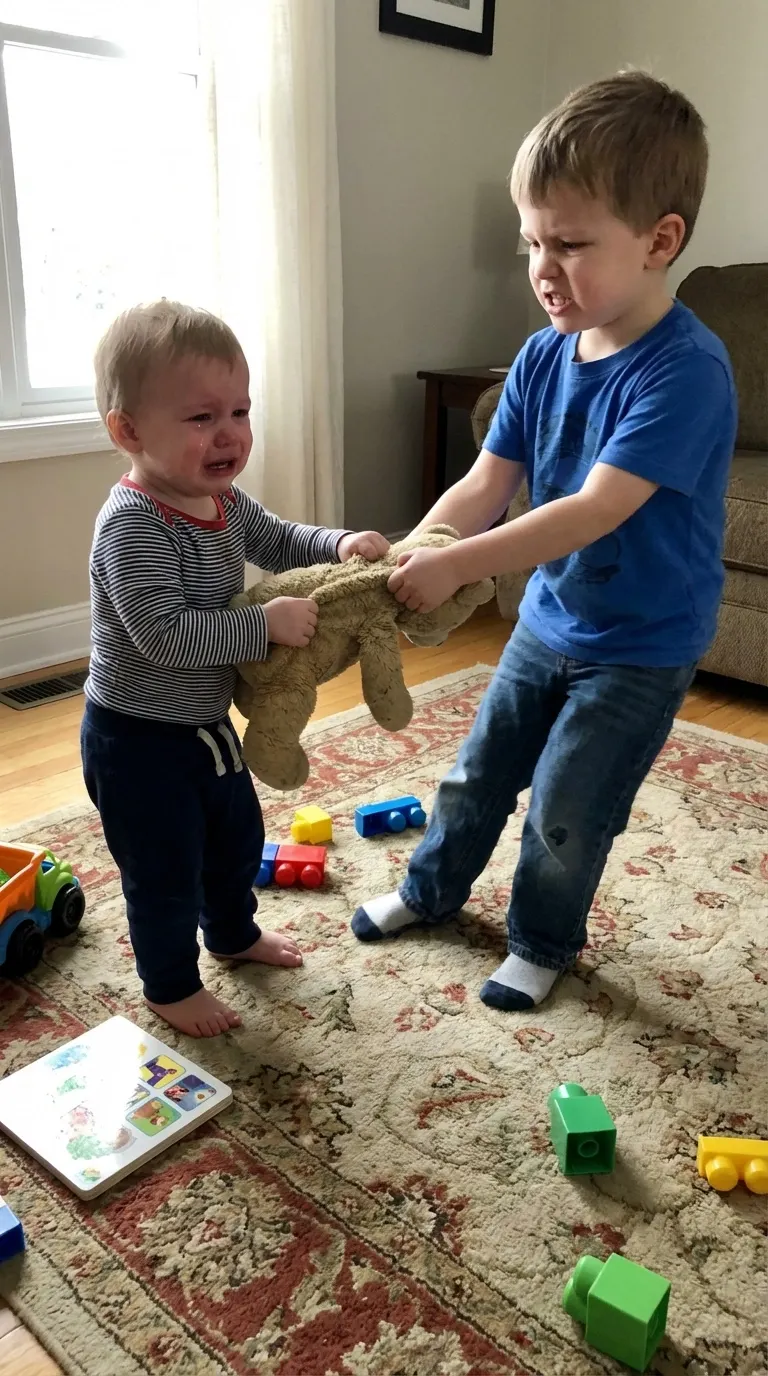
Moments you might recognize
- You poured juice into two cups. One child is studying the other cup. “That’s not fair.” Breakfast pauses while you hear what feels different.
- You are feeding the baby when your older child asks to sit on your lap. You want to make room, and your arms are already full.
- You arrive after the tower falls. Both children are upset, each telling a different part of what happened. You did not see the beginning.
Possible contexts and ideas to explore, in the free parent guide: Why do my kids fight all the time?
When a new baby changes everything
The older child may have feelings they cannot explain while the baby has needs that cannot wait. Those two realities can exist together.
Offer an optional small role and protect time when the older child does not have to help. Care and belonging do not depend on being a cheerful big sibling.
The same toy starts the same argument
It helps to distinguish a shared toy from something that belongs to one child. “Share” can otherwise mean a different rule each time.
For something shared, agree on a visible turn and support the waiting child. Stop unsafe actions without deciding that wanting the toy was itself wrong.
When you cannot tell who started it
You may arrive after the important part has happened. You can stop the conflict without inventing a verdict.
Hear each child, attend to damage and help with a next step. Repair might mean rebuilding something together or giving space; it need not require an immediate performance of affection.
Ideas to explore at home
- Protect each child first
- Name the concrete conflict
- Give a turn a visible ending
- Make space for individual time
Find the context for each possibility in the guide: Why do my kids fight all the time?
An Ownway Stories adventure to read together
Ownway Stories creates an adventure around sibling rivalry, with a character you choose carrying your child’s name. In a familiar paper-cut world, the hero discovers a possible next action with support available. The guide inside connects that particular story to ideas you can explore together. You choose what fits your family.
$32.99
A 32-page printed picture book, for ages 3–6 · You’ll see the cover and the first scenes before you decide.
Questions parents ask
How does a personalized book help with sibling rivalry?
An Ownway adventure can explore making room for another person while the hero’s own needs still matter. The guide invites you to revisit the particular action in the story. It does not promise that siblings will stop disagreeing.
Are the story and the illustrations created for my child?
Yes. The story and illustrations are generated around the name, character, challenge, dedication, and short detail you choose. The system does not select a finished story from a fixed library.
What age is this for?
Ownway Stories are written for children ages 3 to 6 — the age when big feelings arrive faster than the words to describe them.
How long does delivery take?
Each book is printed on demand, so timing depends on production and the carrier. We currently ship within the US only and email available tracking details after dispatch.
Parents also work on
Facing something else? See all 16 challenges · Prefer to read first? Browse the free parent guides.