
Parent guides · Sibling rivalry
Parent guide · Ages 3–6Why do my kids fight all the time?
Because siblings share the most important people in their world, and at 3–6 love gets audited concretely: the bigger slice, the lap, whose turn. Fighting is fairness math out loud, not a broken relationship. A daily solo dose with each child, and problems handed back instead of refereed, quiet most of it.
By Ownway Stories · Published July 17, 2026 · Updated August 17, 2026 · About these guides
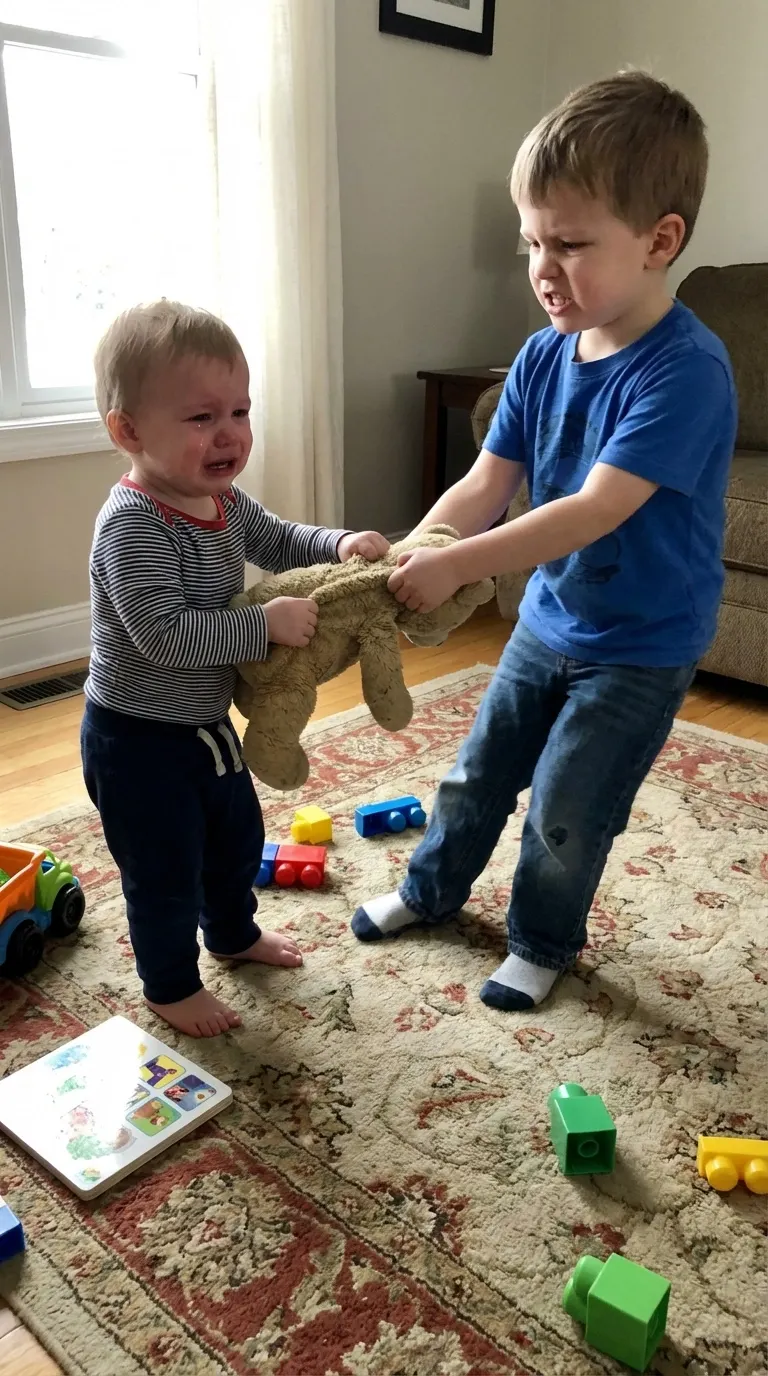
Behind sibling rivalry: what’s happening between 3 and 6
To understand sibling rivalry, parents are sometimes offered this thought experiment: imagine your spouse coming home with a second spouse, explaining there’s plenty of love for everyone. Sharing the most important people in your world is genuinely hard — rivalry isn’t a malfunction, it’s the sound of two hearts doing math about love.
At 3–6 the math is concrete: who got the bigger slice, who sat on the lap, whose turn it was. Fairness-tracking runs all day. Every fight about a toy is partly a referendum on “do I still count?”
What helps at home with sibling rivalry
Give each child a daily solo dose. Ten minutes alone with each child — their choice of game, no sibling, phone away. Most rivalry quiets when nobody has to fight for the spotlight, because everyone reliably gets one.
Don’t referee history. You never saw who started it. Instead of a verdict, give the problem back: “One dinosaur, two kids — what’s your plan?” Kids drilled in solutions sue each other less.
Ban the comparison reflex. “Why can’t you sit like your sister?” feels like motivation and lands like ranking. Compare each child only to themselves last month — that’s the only league table that helps.
Protect ownership. Not everything must be shared. A few items that are truly each child’s own (and a place to keep them) reduces conflict better than a hundred sharing lectures.
Catch them being a team. When they build, plot or giggle together, name it: “You two figured that out as a team.” The sibling bond grows where the light is.
Is it normal for my kids to fight all day?
Frequent skirmishes are standard issue, especially with small age gaps — siblings are each other’s practice ground for negotiation. Watch the trend line and the repair: do they also play together, and do fights blow over? Constant cruelty with no warm moments at all is rarer and worth real attention.
Should I treat my children exactly the same?
Aim for fair, not identical — kids don’t actually want sameness, they want to be seen. “You each get what YOU need” survives reality better than a promise of perfect symmetry that breaks at every birthday and bedtime.
When you want the story to carry part of it
Stories are how this age rehearses life, and they work best when the hero is your child. Ownway writes a printed picture book from scratch around their name and this exact challenge, with a short guide for you inside: a personalized book about sibling rivalry. You’ll see the cover and the first scenes with your child’s name before you decide.
About these guides
This guide is general information written for parents, not medical, psychological or educational advice, and it does not know your child. If a behavior is intense, persistent or new, or if anything here worries you, talk to your pediatrician. Who is behind these guides.