
Parent guides · Hitting & biting
Parent guide · Ages 3–6Why does my child hit and bite?
Because the feeling arrives before the words do. At 3–6, frustration and excitement can overload words and impulse brakes that are still being installed. So the body answers first: it’s development out of sync, not malice. Block first, keep the script three words long, and give the energy a legal exit.
By Ownway Stories · Published July 17, 2026 · Updated August 17, 2026 · About these guides
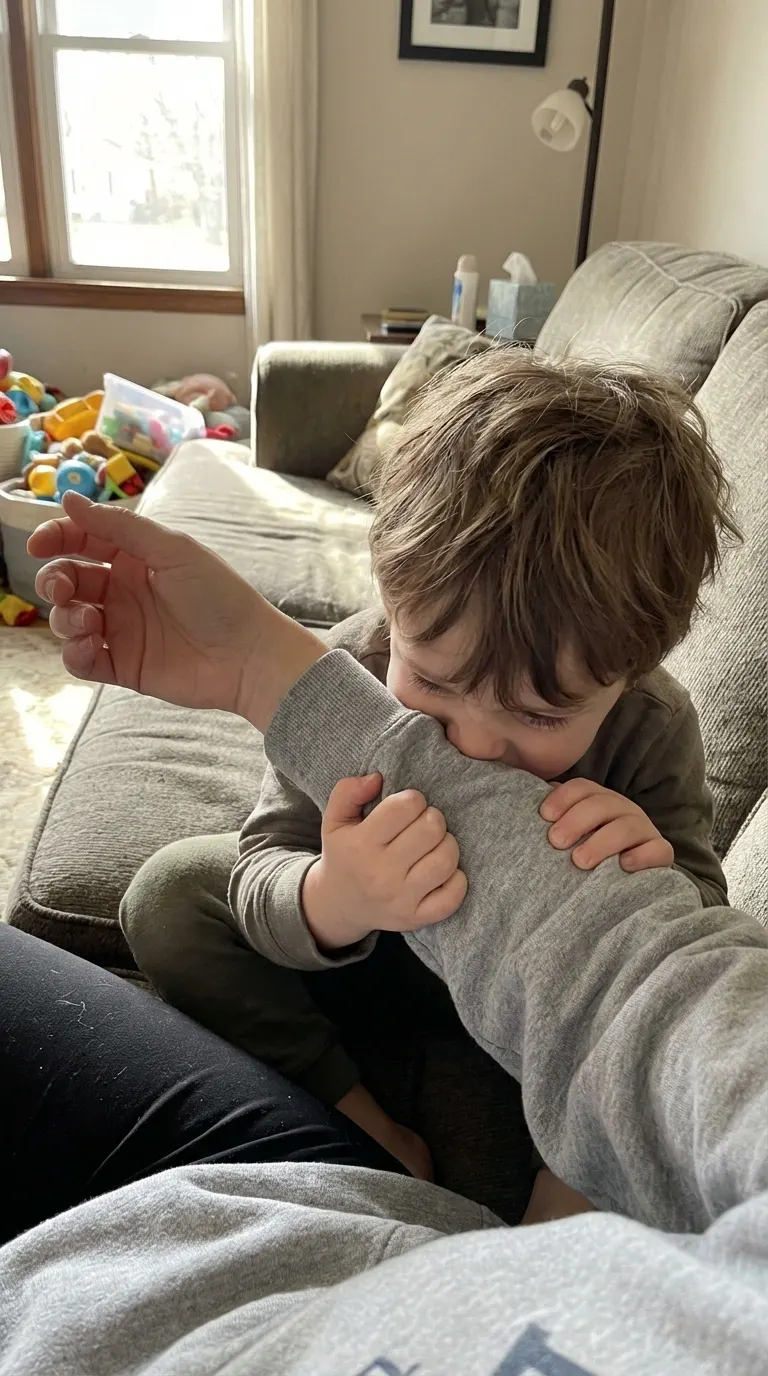
Behind hitting & biting: what’s happening between 3 and 6
When a 3–6 year old hits or bites, the feeling arrived before the words did. Frustration, excitement, even affection can overload a system whose vocabulary and impulse brakes are both still being installed — and the body answers first. It’s development out of sync, not malice.
It’s also brutally effective: one bite and the toy is free, the room reacts, the adults arrive. Until a child owns faster tools — words, asking for help — the body’s tool keeps winning.
What helps at home with hitting & biting
Block first, talk second. Catch the hand mid-swing when you can; calm, physical prevention beats lectures after the fact. “I won’t let you hit” is a sentence said while gently holding a wrist.
Keep the script three words long. “Hitting hurts. Stop.” Mid-overload, a paragraph is noise. Save the conversation for ten minutes later, when the thinking brain is back online.
Give the feeling a legal exit. “You can stomp, you can squeeze the pillow, you can tell me I’M MAD.” The energy needs somewhere to go — banning every outlet just reroutes it to teeth.
Tend to the bitten first. Turning your attention to the hurt child first does double duty: it comforts the victim and quietly teaches the biter that aggression wins less spotlight, not more.
Hunt the pattern. Most hitting has a schedule — always at 5 p.m., always over sharing, always when the room is loud. Find the trigger and you can often disarm next time before it fires.
Is hitting normal at this age, or is something wrong?
Occasional hitting and biting are common right through the preschool years, fading as language and impulse control catch up. Worth a pediatrician chat: aggression that’s constant across settings, injures others regularly, or isn’t budging at all by 5–6 despite consistent calm handling.
Should I bite back or hit back “so they feel it”?
No — it teaches exactly the lesson you’re fighting: that bigger people solve problems with their bodies. What changes behavior at this age is boring repetition: blocked every time, named in three words, redirected to a legal outlet, and noticed loudly the day they use words instead.
When you want the story to carry part of it
Stories are how this age rehearses life, and they work best when the hero is your child. Ownway writes a printed picture book from scratch around their name and this exact challenge, with a short guide for you inside: a personalized book about hitting & biting. You’ll see the cover and the first scenes with your child’s name before you decide.
About these guides
This guide is general information written for parents, not medical, psychological or educational advice, and it does not know your child. If a behavior is intense, persistent or new, or if anything here worries you, talk to your pediatrician. Who is behind these guides.