
A personalized book about hitting & biting, written for your child
A moment becomes a hit, a bite or a push. You need to keep everyone safe and understand what could happen differently.
Moments you might recognize
- Daycare calls about a bite during play. You ask whether the other child is all right and what happened just before. You want to understand the moment you did not see.
- Your child pushes someone at the playground. You move closer to stop another push. There are two children to care for and a conversation that can wait until they are safe.
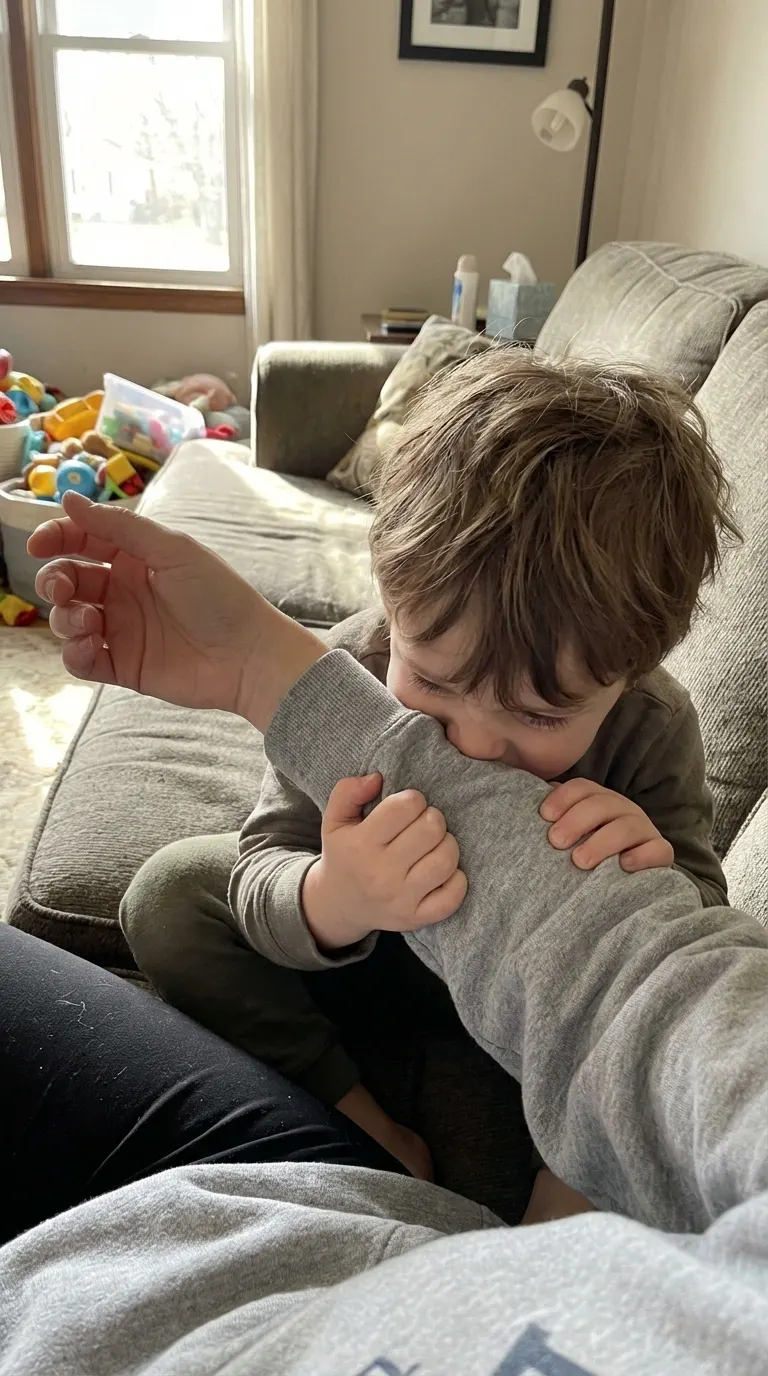
- Your child hits your face during an upset. It hurts. You make space between you and try to find a few words that hold the limit without adding to the hurt.
Possible contexts and ideas to explore, in the free parent guide: Why does my child hit and bite?
When daycare reports another incident
An incident report can leave you worried before you know what happened. Ask for the concrete sequence: the activity, the interaction and how adults responded.
Agree on supervision and a simple alternative action with caregivers. A story can support later conversation, but it does not replace a plan that keeps children safe.
When your child hits you
It can hurt physically and emotionally. Your feelings matter, and you still need to prevent another unsafe action.
Create safe space and ask another adult for help if available. You can return to the moment once you are both able, keeping the limit clear without calling your child bad.
When words are hard to find
A child may need help finding an action before the next difficult interaction, rather than a long explanation afterward.
You could rehearse asking for space or finding an adult with toys. If a similar action appears in your child’s book, it can become a shared reference to explore, not an order to copy the hero.
Ideas to explore at home
- Stop the unsafe action
- Care for the person hurt
- Explore another action later
- Compare observations
Find the context for each possibility in the guide: Why does my child hit and bite?
An Ownway Stories adventure to read together
Ownway Stories creates an adventure around hitting & biting, with a character you choose carrying your child’s name. In a familiar paper-cut world, the hero discovers a possible next action with support available. The guide inside connects that particular story to ideas you can explore together. You choose what fits your family.
$32.99
A 32-page printed picture book, for ages 3–6 · You’ll see the cover and the first scenes before you decide.
Questions parents ask
Can a story help a child who hits?
An Ownway story can explore the moment before an action and a different way to communicate or pause. The hero carries your child’s name. The guide connects that story to something you could practice together, alongside the supervision and support your child needs.
Are the story and the illustrations created for my child?
Yes. The story and illustrations are generated around the name, character, challenge, dedication, and short detail you choose. The system does not select a finished story from a fixed library.
What age is this for?
Ownway Stories are written for children ages 3 to 6 — the age when big feelings arrive faster than the words to describe them.
How long does delivery take?
Each book is printed on demand, so timing depends on production and the carrier. We currently ship within the US only and email available tracking details after dispatch.
Parents also work on
Facing something else? See all 16 challenges · Prefer to read first? Browse the free parent guides.