
A personalized book about potty accidents, written for your child
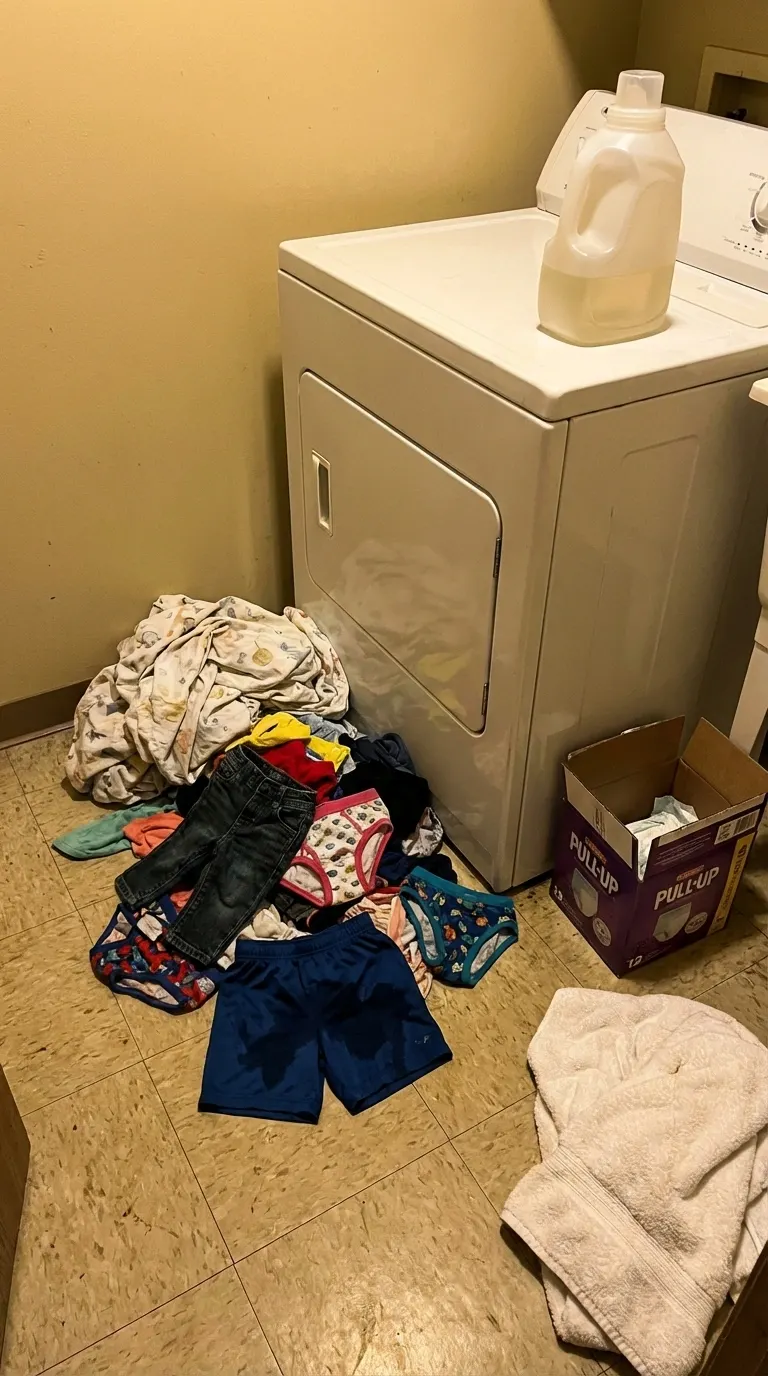
A change of clothes, another load of laundry. You want to understand what your child needs while toilet learning unfolds.
Moments you might recognize
- There were several dry days, then an accident on the way home. You find the spare clothes and wonder what was different today.
- Your child is dry during the day and wears protection at night. They ask about sleeping at a friend’s house, and you want to find a comfortable way to talk about it.
- Preschool has asked about toilet learning before September. The adult deadline is approaching while your child is still figuring out what their body is telling them.
Possible contexts and ideas to explore, in the free parent guide: Why is my potty-trained child having accidents again?
When accidents return after dry days
A return of accidents does not erase what your child has learned. It is a change to understand, not a reason to compare them with an earlier, “better” version of themselves.
Note when it happens and any discomfort, and discuss the pattern with your pediatrician. In the meantime, keep spare clothes available and avoid blame.
When preschool adds a deadline
An enrollment rule can add pressure to a process your child cannot complete simply by agreeing to a date.
Talk with the school about practical support and with your pediatrician about concerns. Keep the adult deadline out of the story you tell your child about their worth.
When nighttime wetting is the worry
Being able to use the toilet while awake and staying dry through sleep are different questions. A daytime success does not create a promise for the night.
Use a comfortable practical arrangement and ask your pediatrician about your child’s pattern. A personalized book can be shared reading; it is not a treatment for bedwetting.
Ideas to explore at home
- Keep cleanup matter-of-fact
- Make the bathroom easier to reach
- Offer an ordinary opportunity
- Ask about discomfort
Find the context for each possibility in the guide: Why is my potty-trained child having accidents again?
An Ownway Stories adventure to read together
Ownway Stories creates an adventure around potty accidents, with a character you choose carrying your child’s name. In a familiar paper-cut world, the hero discovers a possible next action with support available. The guide inside connects that particular story to ideas you can explore together. You choose what fits your family.
$32.99
A 32-page printed picture book, for ages 3–6 · You’ll see the cover and the first scenes before you decide.
Questions parents ask
Can a story help with potty accidents?
An Ownway story can explore noticing a body signal and taking a small action with help available. The guide provides a bridge from that fictional moment to home. It does not promise dryness, set a timetable or replace an assessment of physical concerns.
Are the story and the illustrations created for my child?
Yes. The story and illustrations are generated around the name, character, challenge, dedication, and short detail you choose. The system does not select a finished story from a fixed library.
What age is this for?
Ownway Stories are written for children ages 3 to 6 — the age when big feelings arrive faster than the words to describe them.
How long does delivery take?
Each book is printed on demand, so timing depends on production and the carrier. We currently ship within the US only and email available tracking details after dispatch.
Parents also work on
Facing something else? See all 16 challenges · Prefer to read first? Browse the free parent guides.