
A personalized book about fear of the dark, written for your child
The room is familiar, but it feels different with the light off. A shadow or a sound becomes hard to pass by.
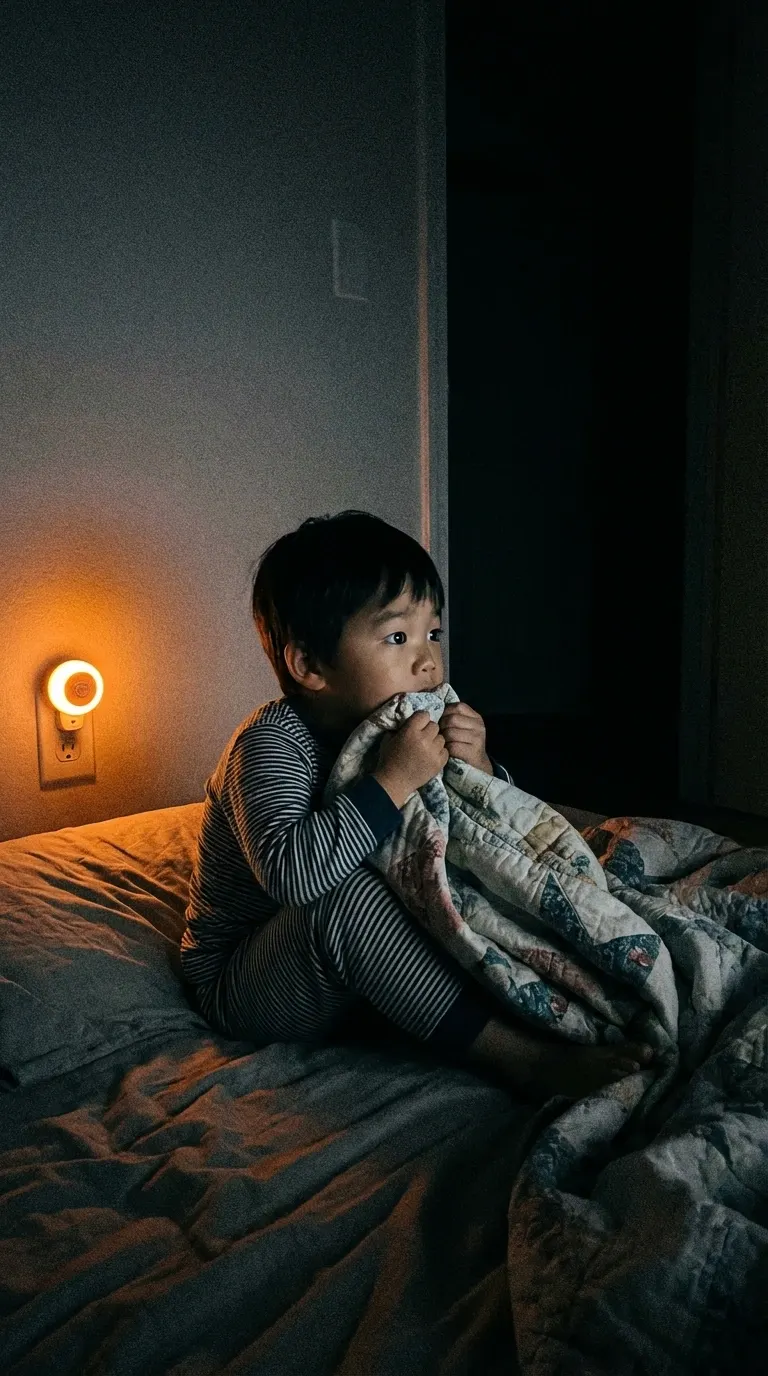
Moments you might recognize
- You looked under the bed together. Your child points toward the curtain instead. You realize you may have been checking a different worry from theirs.
- They wake during the night and call for you. You sit beside them, both tired, while they try to explain what felt frightening.
- The bathroom is a few steps down the hallway. Your child asks you to come too because the hall is dark. It was an ordinary journey in daylight.
Possible contexts and ideas to explore, in the free parent guide: Why is my child suddenly afraid of the dark?
When checking the room does not settle the fear
An inspection may answer your question without answering your child’s. The worry could be about a sound, a remembered story or being alone.
Ask about one specific part and listen without arguing them out of it. You can explain what you know about the room while acknowledging that it feels different at night.
When a nightlight or open door helps
Comfort is not a prize for being brave. A small adjustment may simply make the room easier to use.
Choose something safe and sustainable for your family. If you later want to change it, explain the change and take your child’s response into account.
A story about noticing in the dark
In an adventure, the hero has something they want to do beyond the uncertain place. Their reason to continue belongs to the story.
Afterward, you can notice the small action they chose. There is no need to recreate a frightening situation at home to make the reading useful.
Ideas to explore at home
- Ask about the particular part
- Look together at one familiar detail
- Choose a manageable comfort
- Revisit worries outside bedtime
Find the context for each possibility in the guide: Why is my child suddenly afraid of the dark?
An Ownway Stories adventure to read together
Ownway Stories creates an adventure around fear of the dark, with a character you choose carrying your child’s name. In a familiar paper-cut world, the hero discovers a possible next action with support available. The guide inside connects that particular story to ideas you can explore together. You choose what fits your family.
$32.99
A 32-page printed picture book, for ages 3–6 · You’ll see the cover and the first scenes before you decide.
Questions parents ask
How does a personalized story help with fear of the dark?
An Ownway adventure can explore a dim place and one way the hero comes to understand a familiar detail. The included guide invites you to revisit that action together. The story leaves room for support and for a little fear to remain.
Are the story and the illustrations created for my child?
Yes. The story and illustrations are generated around the name, character, challenge, dedication, and short detail you choose. The system does not select a finished story from a fixed library.
What age is this for?
Ownway Stories are written for children ages 3 to 6 — the age when big feelings arrive faster than the words to describe them.
How long does delivery take?
Each book is printed on demand, so timing depends on production and the carrier. We currently ship within the US only and email available tracking details after dispatch.
Parents also work on
Facing something else? See all 16 challenges · Prefer to read first? Browse the free parent guides.