
A personalized book about low confidence, written for your child
“I can’t” arrives before the first attempt. You want to help your child find a beginning that feels possible.
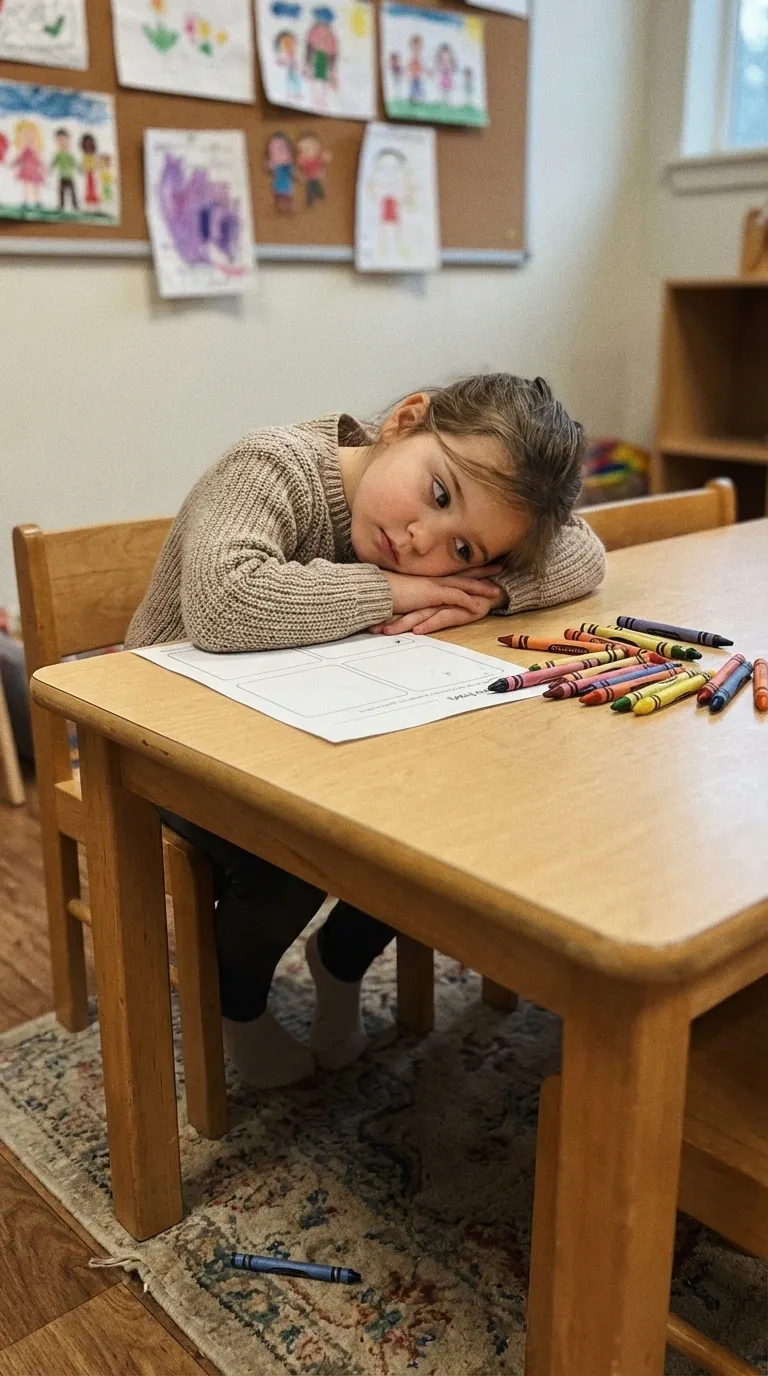
Moments you might recognize
- “I’m stupid,” they say over a puzzle. You do not know where the words came from. You want to hear what happened without letting the mistake become who they are.
- After a new class, your child says they were not as good as the others. You wonder whether they want another try, some help or a different beginning.
- The drawing paper is blank. They ask you to start it. You sit beside them, looking for one part they might want to choose themselves.
Possible contexts and ideas to explore, in the free parent guide: Why does my child say “I can’t” before even trying?
When the first mistake ends the activity
The wrong line can matter a great deal to a child who had a particular picture in mind. You can hear that disappointment before suggesting a solution.
Ask whether they want help, another attempt or a pause. If they continue, notice the specific action they chose instead of turning it into a test of persistence.
When your child says “I’m stupid”
A painful sentence deserves attention without assuming you know whether it is an experiment, a lasting belief or words heard elsewhere.
You can say, “That sounds hard to feel. What happened?” Make clear that an error does not define them. If the language persists or comes with broader distress, seek support.
When a new activity feels too big
Watching first, meeting one person or trying one part may be more manageable than joining the whole activity at once.
Choose the first step together. A story can offer another character to notice, while your child’s pace and their need for help remain their own.
Ideas to explore at home
- Find one small part
- Notice what actually happened
- Offer help without taking over
- Leave room for a pause
Find the context for each possibility in the guide: Why does my child say “I can’t” before even trying?
An Ownway Stories adventure to read together
Ownway Stories creates an adventure around low confidence, with a character you choose carrying your child’s name. In a familiar paper-cut world, the hero discovers a possible next action with support available. The guide inside connects that particular story to ideas you can explore together. You choose what fits your family.
$32.99
A 32-page printed picture book, for ages 3–6 · You’ll see the cover and the first scenes before you decide.
Questions parents ask
Can a book make a difference for a child who says “I can’t”?
An Ownway story gives a hero your child’s name in a recurring paper world. The hero has an adventure and discovers a manageable action with support available. The guide connects that action to an optional attempt together; it does not promise to install confidence.
Are the story and the illustrations created for my child?
Yes. The story and illustrations are generated around the name, character, challenge, dedication, and short detail you choose. The system does not select a finished story from a fixed library.
What age is this for?
Ownway Stories are written for children ages 3 to 6 — the age when big feelings arrive faster than the words to describe them.
How long does delivery take?
Each book is printed on demand, so timing depends on production and the carrier. We currently ship within the US only and email available tracking details after dispatch.
Parents also work on
Facing something else? See all 16 challenges · Prefer to read first? Browse the free parent guides.