
A personalized book about lying, written for your child
What you hear does not match what you saw. You want room for the truth, responsibility and a way to repair what happened.
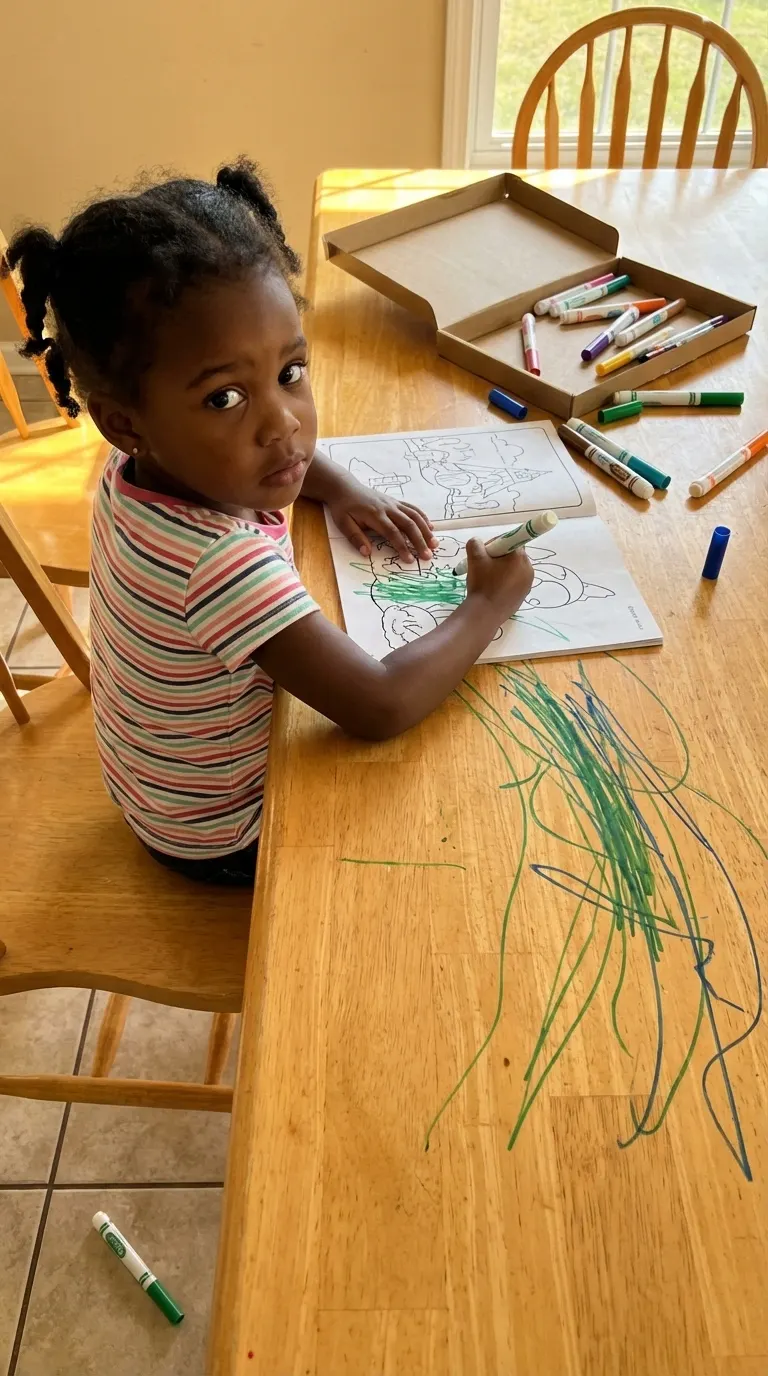
Moments you might recognize
- You saw the cookie leave the plate. Your child says they did not take it. You know what you saw, but you are not yet sure what makes the answer difficult.
- There is marker on the wall and more than one account of how it got there. You are trying to separate what you know from what you still need to ask.
- You want your child to tell you what happened. You also need the spill cleaned up. You are looking for a next step that makes room for both.
Possible contexts and ideas to explore, in the free parent guide: Why does my child lie to my face?
“It wasn’t me,” when you saw what happened
You do not need to ask a question whose answer you already know. You can state the observation calmly and move toward understanding and repair.
“I saw the cup fall when you pushed it. Let’s make this safe” makes the action clear without requiring a debate about the child’s character.
When the story keeps changing
Several accounts do not make it easy to know what happened. Separate your observations from the parts you are still trying to understand.
Ask one question at a time and allow a pause. If something serious may have happened, get appropriate support rather than trying to resolve it through a storybook lesson.
An adventure where an error can be repaired
A hero can make a mistake and still remain the person the reader wants to follow. That gives a story room for both responsibility and belonging.
You might ask what changed after the hero showed what happened. Let your child respond to the fiction without requiring them to discuss a recent incident of their own.
Ideas to explore at home
- Start with what you observed
- Leave room for an account
- Connect responsibility to repair
- Show your own correction
Find the context for each possibility in the guide: Why does my child lie to my face?
An Ownway Stories adventure to read together
Ownway Stories creates an adventure around lying, with a character you choose carrying your child’s name. In a familiar paper-cut world, the hero discovers a possible next action with support available. The guide inside connects that particular story to ideas you can explore together. You choose what fits your family.
$32.99
A 32-page printed picture book, for ages 3–6 · You’ll see the cover and the first scenes before you decide.
Questions parents ask
How does a story help a child who lies?
An Ownway story can explore the difficulty of showing what happened and taking part in repair. The hero remains someone worth caring about after an error. The guide invites a conversation about that story, rather than using the book to extract a confession.
Are the story and the illustrations created for my child?
Yes. The story and illustrations are generated around the name, character, challenge, dedication, and short detail you choose. The system does not select a finished story from a fixed library.
What age is this for?
Ownway Stories are written for children ages 3 to 6 — the age when big feelings arrive faster than the words to describe them.
How long does delivery take?
Each book is printed on demand, so timing depends on production and the carrier. We currently ship within the US only and email available tracking details after dispatch.
Parents also work on
Facing something else? See all 16 challenges · Prefer to read first? Browse the free parent guides.