
Parent guides · Lying
Parent guide · Ages 3–6Why does my child lie to my face?
Because first lies, around 3–5, are actually a cognitive milestone: your child just discovered that you don’t know what they know. The ability installs before the ethics do. Most early lies are shields against trouble, wishes dressed as facts, or polish on an uncomfortable truth. Making truth cheap beats courtroom tactics.
By Ownway Stories · Published July 17, 2026 · Updated August 17, 2026 · About these guides
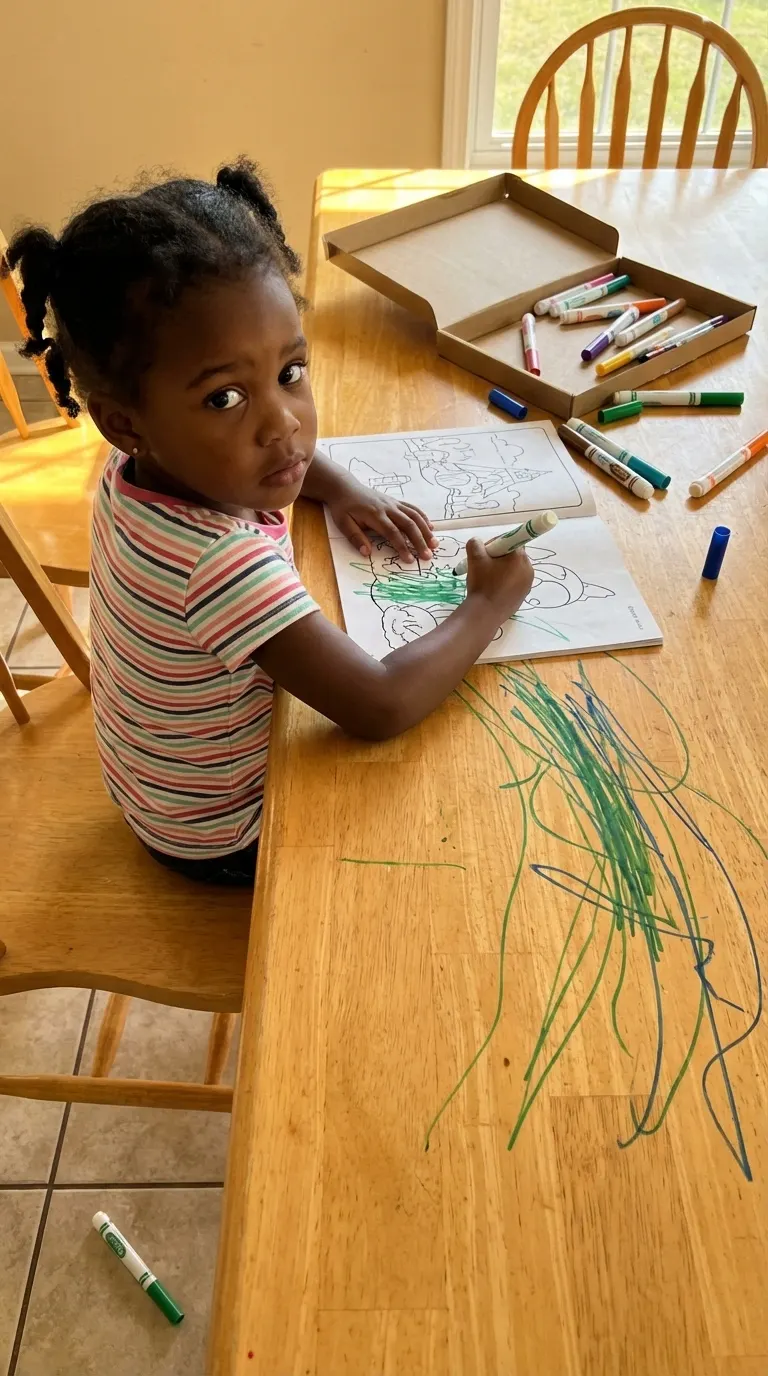
Behind lying: what’s happening between 3 and 6
First lies around 3–5 are actually a cognitive milestone: to say “I didn’t do it,” a child must realize you don’t know what they know — that minds are separate. Uncomfortable as it is, lying means the social brain came online. The ethics simply install later than the ability.
Most early lies are one of three kinds: the shield (avoiding trouble), the wish (“a dragon did it” — half story, half hope), and the polish (looking better than the truth felt). What they’re almost never: a character flaw at age four.
What helps at home with lying
Make truth cheap. If confession costs an explosion, you’re pricing honesty out of the market. “Thank you for telling me — let’s clean it up” keeps the door open; the spill gets fixed either way.
Skip the trap questions. You see the marker on the wall. “Did you draw this?” invites a lie; “I see marker on the wall — let’s get a cloth” skips the trial and goes to repair. Don’t schedule exams the child can only fail.
Separate the story from the lie. Imagination games deserve to live. “What a story! Now tell me the for-real version” teaches the line between play-pretend and deception without burning the pretend down.
Praise honesty when it costs them. The day they admit something against their own interest is the day to make a quiet fuss: “That was hard to say. I’m proud of you.” That’s the lesson landing — mark it.
Audit the broadcast. Kids clock every white lie about their age at the ticket counter and every “tell them I’m not here.” At this age the model IS the message; the cheapest fix for kid honesty is adult honesty within earshot.
Is lying normal in a 4 or 5 year old?
So normal it’s a milestone — experimenting with untruths peaks right in this window because the ability is brand new. It fades as kids confirm that truth is safe and that being believed feels good. A lasting pattern of lies that hurt others, or lying braided with real fear, is worth a closer look with your pediatrician.
How should I react when I catch my child lying?
Skip the courtroom. Name reality without venom, move to repair, and keep confession cheaper than concealment. Two consequences are fine but keep them about the act, not the lie-as-identity: “you’re a liar” is the one label that makes future truth LESS likely.
When you want the story to carry part of it
Stories are how this age rehearses life, and they work best when the hero is your child. Ownway writes a printed picture book from scratch around their name and this exact challenge, with a short guide for you inside: a personalized book about lying. You’ll see the cover and the first scenes with your child’s name before you decide.
About these guides
This guide is general information written for parents, not medical, psychological or educational advice, and it does not know your child. If a behavior is intense, persistent or new, or if anything here worries you, talk to your pediatrician. Who is behind these guides.