
A personalized book about sensory sensitivity, written for your child
A seam, a sound or a crowded room feels uncomfortable to your child. You want to understand the particular part that is hard.
Moments you might recognize
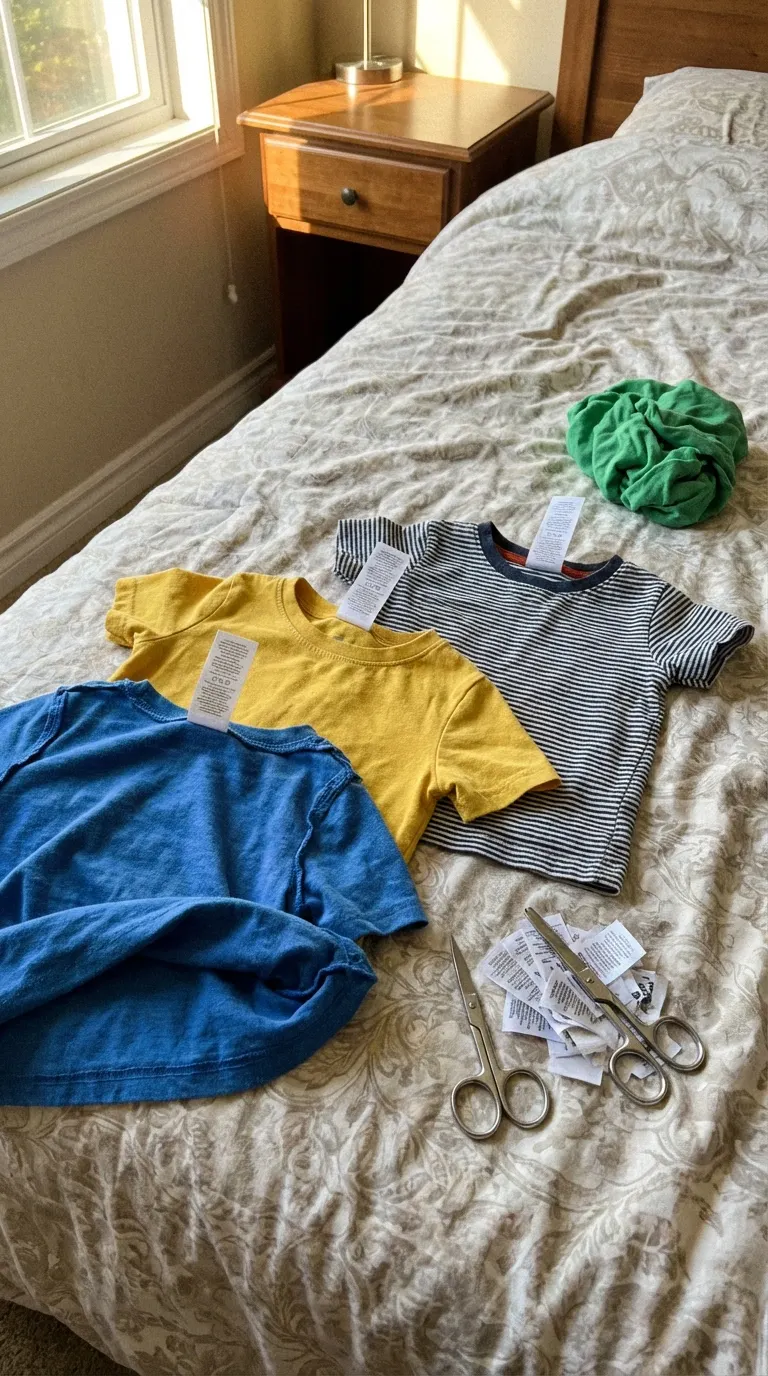
- You have tried three shirts. The seam still hurts, your child says. The clock is moving while you look for the one that felt comfortable yesterday.
- At dinner, two foods touch on the plate. Your child pushes it away. You ask which part feels difficult instead of assuming it is the whole meal.
- The birthday song begins and your child covers their ears. You move toward a quieter space together before deciding what happens next.
Possible contexts and ideas to explore, in the free parent guide: Why do tags, seams and loud noises upset my child so much?
When getting dressed hurts
The clock may be urgent, but discomfort still needs attention. Ask where the shirt or sock feels wrong and notice whether a particular fit or texture recurs.
Offer a comfortable alternative where possible. If clothing remains persistently difficult, bring concrete examples to a professional who can assess your child’s needs.
When a party becomes too much
A busy room contains sound, movement and closeness at once. Your child may have trouble explaining which part is difficult while still in it.
A quieter break can give you room to decide whether to return or leave. Participation does not have to mean staying through the whole event.
When distress appears after school
The timing is a clue, not proof that your child has been holding everything in. Hunger, fatigue, a difficult event or the transition itself may be relevant.
Try an arrival that leaves room for quiet or familiar play, and compare observations with the teacher. Keep the explanation open while you learn what your child needs.
Ideas to explore at home
- Ask about the specific sensation
- Try a practical adjustment
- Plan a way to take a break
- Ask for individual support when needed
Find the context for each possibility in the guide: Why do tags, seams and loud noises upset my child so much?
An Ownway Stories adventure to read together
Ownway Stories creates an adventure around sensory sensitivity, with a character you choose carrying your child’s name. In a familiar paper-cut world, the hero discovers a possible next action with support available. The guide inside connects that particular story to ideas you can explore together. You choose what fits your family.
$32.99
A 32-page printed picture book, for ages 3–6 · You’ll see the cover and the first scenes before you decide.
Questions parents ask
How can a story help a sensitive child?
An Ownway story can include a hero who notices discomfort and finds a manageable way to continue, with help available. The guide connects that particular discovery to an optional exploration together. It is not sensory therapy or a promise of increased tolerance.
Are the story and the illustrations created for my child?
Yes. The story and illustrations are generated around the name, character, challenge, dedication, and short detail you choose. The system does not select a finished story from a fixed library.
What age is this for?
Ownway Stories are written for children ages 3 to 6 — the age when big feelings arrive faster than the words to describe them.
How long does delivery take?
Each book is printed on demand, so timing depends on production and the carrier. We currently ship within the US only and email available tracking details after dispatch.
Parents also work on
Facing something else? See all 16 challenges · Prefer to read first? Browse the free parent guides.