
Parent guides · Fear of the dark
Parent guide · Ages 3–6Why is my child suddenly afraid of the dark?
Because fear of the dark arrives with imagination, usually around 3 or 4. The same new superpower that invents tea parties keeps running after lights-out, with nothing to check it against, so the coat becomes a shape and the shape becomes a story. Handing your child power in the dark works; debating its contents doesn’t.
By Ownway Stories · Published July 17, 2026 · Updated August 17, 2026 · About these guides
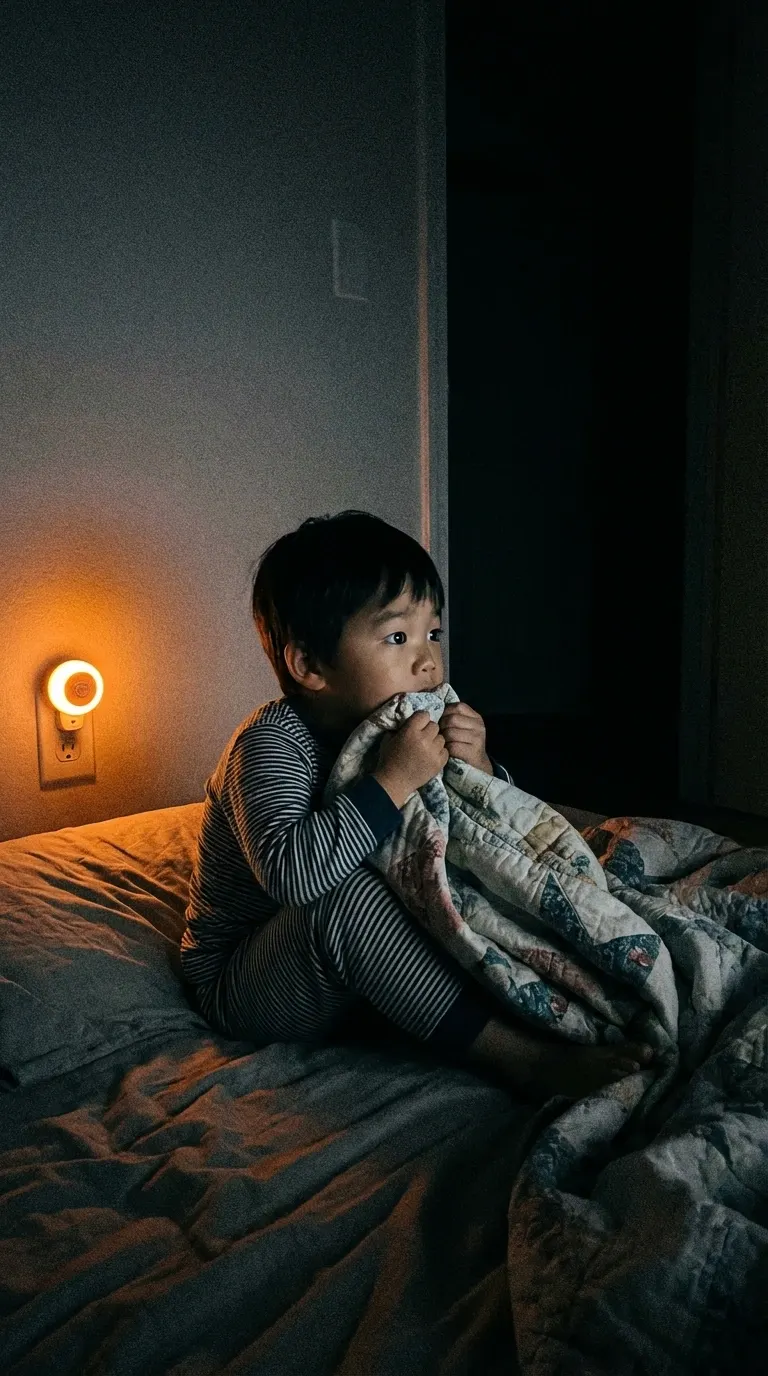
Behind fear of the dark: what’s happening between 3 and 6
Fear of the dark usually arrives right when imagination does — around 3 or 4. The same new superpower that invents tea parties and dragons keeps running after lights-out, but in the dark there’s nothing to check it against, so the coat becomes a shape and the shape becomes a story. The fear is imagination doing its job in an empty room.
It’s worth taking seriously precisely because it’s real to them. “There’s nothing there” is true and useless: you’re asking a child to trust your eyes over their pictures. The way through is giving THEM power in the dark, not arguing about its contents.
What helps at home with fear of the dark
Honor the fear, not the monster. “Being scared in the dark is real — lots of brave people feel it” lands; “monsters don’t exist” bounces. Validate the feeling, then move to what your child can DO about it.
Engineer the room together. A warm nightlight they pick, the door angle they choose, a “guard” teddy on duty. Each control they hold converts the dark from something that happens to them into territory they run.
Build darkness reps in daylight hours. Flashlight hide-and-seek, shadow puppets, a blanket cave — fun in the dark, by choice, in small doses. Power over the dark is built when the stakes are low.
Keep the checks brief and identical. If you do a “monster check,” do it once, the same way, with confidence. Long searching sweeps every night quietly confirm there’s something worth searching for.
Arm them with a script. A phrase that’s theirs (“I’m the boss of this room”), a button on the nightlight, a hero they can summon in their head. A child with a move to make is a child who isn’t just waiting in the dark.
At what age does fear of the dark go away?
It typically peaks in the preschool years and fades through age 6–8 as kids get better at separating imagined from real. It often ebbs and spikes with life changes. If fear is colonizing the whole evening, or daytime anxiety is heavy too, loop in your pediatrician.
Should I let my child sleep with the light on?
A dim, warm nightlight is a fine tool, not a defeat — sleep quality at this age survives a soft glow far better than it survives nightly terror. What to avoid: escalating to full daylight in the room, and screens as the comfort tool (both genuinely disturb sleep).
When you want the story to carry part of it
Stories are how this age rehearses life, and they work best when the hero is your child. Ownway writes a printed picture book from scratch around their name and this exact challenge, with a short guide for you inside: a personalized book about fear of the dark. You’ll see the cover and the first scenes with your child’s name before you decide.
About these guides
This guide is general information written for parents, not medical, psychological or educational advice, and it does not know your child. If a behavior is intense, persistent or new, or if anything here worries you, talk to your pediatrician. Who is behind these guides.