
Parent guides · Picky eating
Parent guide · Ages 3–6Why is my child such a picky eater?
Because young children are wired to distrust new foods and taste bitterness more intensely than adults. They also learn fast that the table is the one meeting they chair, and pressure makes all of it worse. Splitting the jobs (you decide what’s served, they decide how much) plus calm, repeated exposure is what actually widens a menu.
By Ownway Stories · Published July 17, 2026 · Updated August 17, 2026 · About these guides
Behind picky eating: what’s happening between 3 and 6
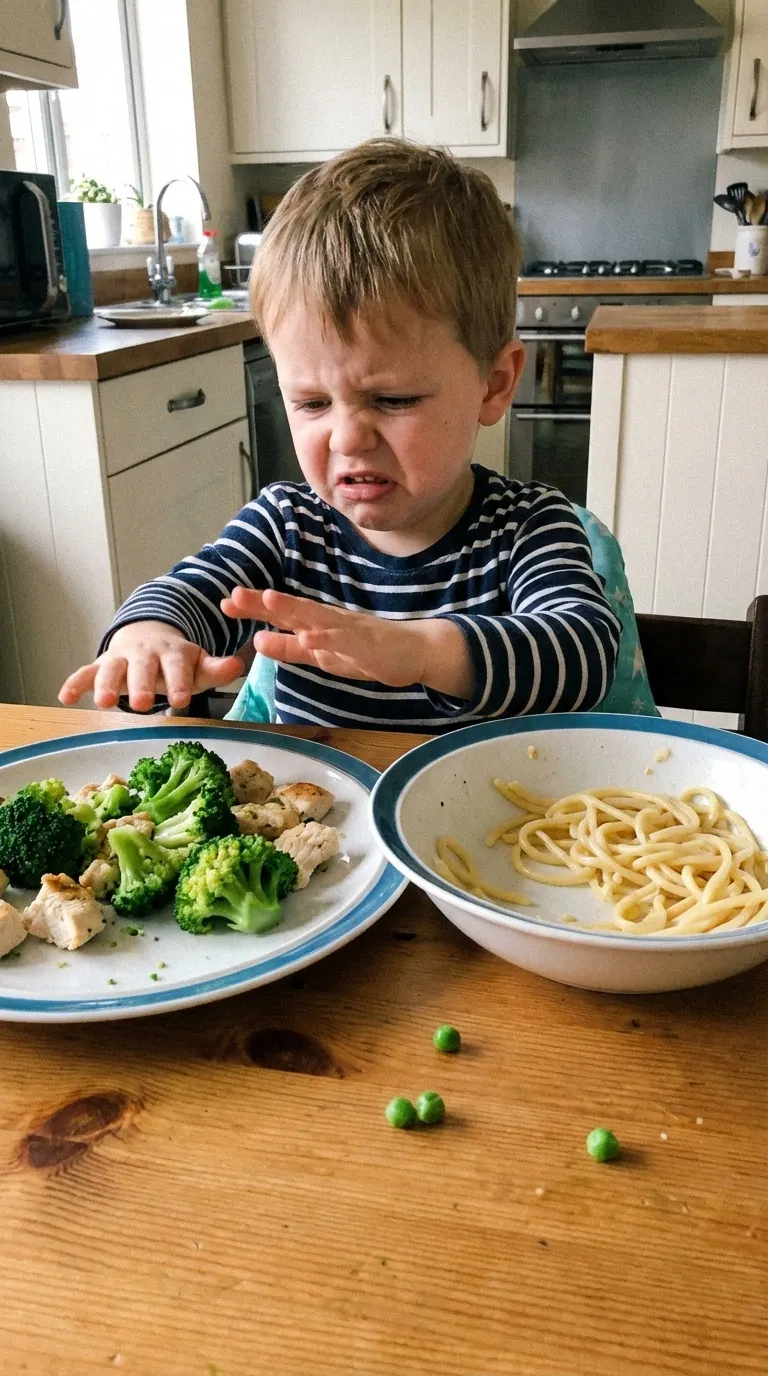
Picky eating around 3–6 has deep roots: young children are wired to distrust new foods — in human history, the toddler who ate unknown berries didn’t do well. Add taste buds that genuinely experience bitterness more intensely than yours, and the suspicious stare at broccoli starts to look less like defiance and more like biology.
Then mealtime becomes a stage. The more a parent coaxes, bargains and hovers, the more the plate turns into a power seat. Many children aren’t refusing the food — they’re holding the one meeting where they chair the table.
What helps at home with picky eating
Split the jobs. You decide what’s served and when; your child decides whether and how much. This division (it’s the classic feeding advice for a reason) removes the fight from the table — both sides finally have a lane.
Serve one safe thing, always. Every meal includes something they reliably eat — bread, rice, fruit. No child panics at a table where starving isn’t on the menu, and calm is what new foods need to get tried.
Let food be boring. No applause for eating, no commentary on not eating. Attention feeds the theater. A bite taken in peace teaches more than one extracted by negotiation.
Count exposures, not bites. A new food often needs ten to fifteen calm appearances before it gets tasted. Seeing it, touching it, having it on the plate next to the safe food — it all counts. Refusal isn’t failure; it’s rep number seven.
Cook with them. A child who washed the beans and stirred the pot is twice as likely to taste the result. Ownership is the best seasoning there is.
My 4-year-old eats almost nothing — should I worry?
Most picky eaters grow fine: appetites at this age are smaller and weirder than parents expect, and a week’s intake usually balances out even when single days look alarming. Check with your pediatrician if your child is losing weight, gagging on entire textures, or eating from a list of fewer than ~10 foods that keeps shrinking.
Should I make my child clean their plate?
No — clean-plate rules teach kids to ignore their own fullness, which is the opposite of healthy eating long-term. The win isn’t an empty plate tonight; it’s a child who, at 10, eats varied food and stops when full. Calm exposure beats pressure every time.
When you want the story to carry part of it
Stories are how this age rehearses life, and they work best when the hero is your child. Ownway writes a printed picture book from scratch around their name and this exact challenge, with a short guide for you inside: a personalized book about picky eating. You’ll see the cover and the first scenes with your child’s name before you decide.
About these guides
This guide is general information written for parents, not medical, psychological or educational advice, and it does not know your child. If a behavior is intense, persistent or new, or if anything here worries you, talk to your pediatrician. Who is behind these guides.